
The Story
Why it exists.
The beginning
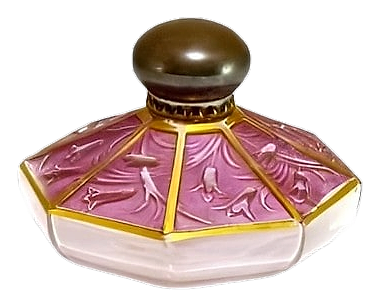
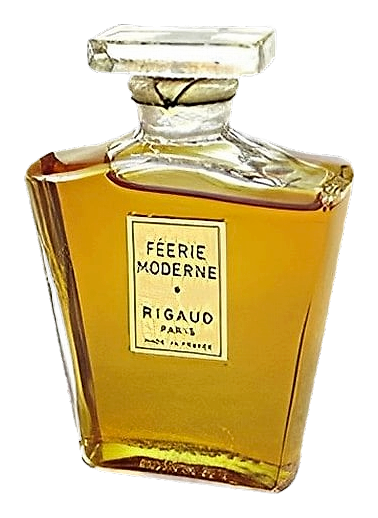
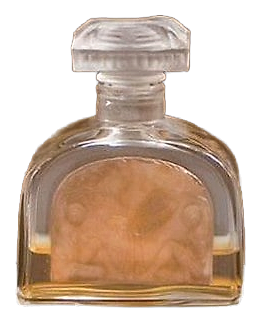
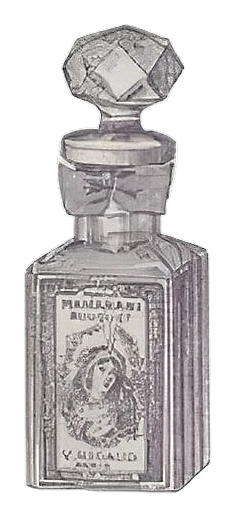
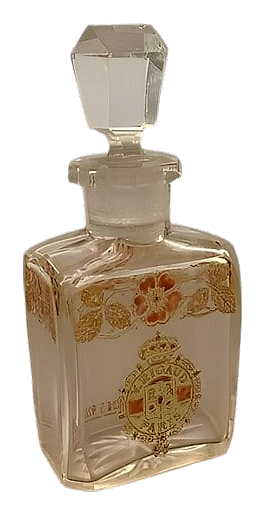
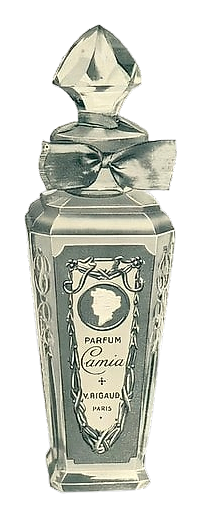
Camia arrived in 1906 from the house of Rigaud, a perfumer whose catalogue already spanned a range of named compositions by the time this one was released. Henri Rigaud worked in an era when a woman's fragrance was expected to behave like good manners: present without insisting. The composition belongs to a lineage of floral beauty that the house had been refining for generations, a tradition rooted in careful blending rather than spectacle. What's preserved in the formula is a way of thinking about scent that valued what stayed close to the skin over what projected across a room. The name itself suggests something softer than a declaration, a quiet bloom that rewards attention rather than demanding it.
The formula sits within a family of floral compositions from the house, and Camia fits squarely in that lineage. What makes a composition like Camia worth revisiting is the restraint. The formula doesn't fight for attention, it earns a second sniff. There's a quality to the wear that recalls an older notion of elegance, one where silence was considered more persuasive than proclamation. The air around the petals does as much work as the petals themselves, and that breathing room is part of what the fragrance communicates.
The evolution
The opening arrives like a hand extended in a drawing room: a cool, clean gesture that catches the air first, nothing sharp, nothing brash. Within twenty minutes the florals knit together into something less like a bouquet and more like a single sustained breath. The whites and creams settle into one another, each finding its place without pushing the others aside. The drydown arrives slowly, carrying the floral heart into a softer, warmer place. It doesn't vanish so much as settle into the skin, folding itself into the warmth already there. By evening the composition has thinned to something skin-close, a whisper of the petals that opened it hours before, close, comforting, and still recognizably itself. You catch it when you turn your wrist, when you press your collar to your neck, when you rest your hand against the page of a book.
Cultural impact
Camia sits within an early-twentieth-century tradition of floral compositions that treated restraint as a form of luxury. Its near-disappearance from modern retail makes it more of a historical artifact than a current cultural reference, but the formula represents a moment when floral perfumery still held onto quieter values. The composition rewards those curious enough to seek it out, offering a window into an approach to scent that valued subtlety over projection and intimacy over announcement.
The House
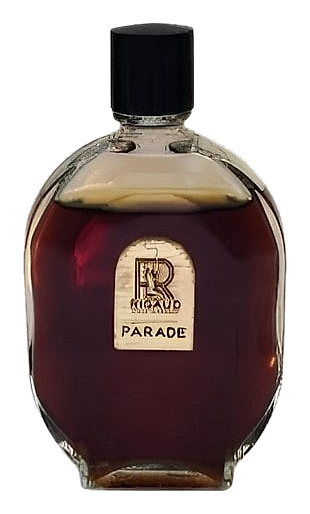
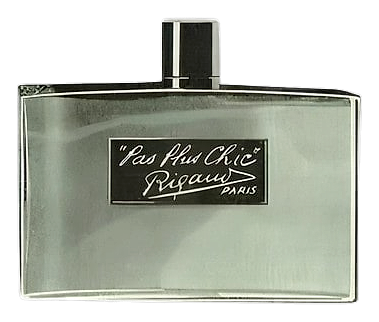
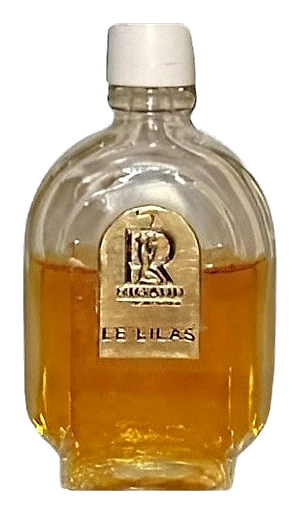
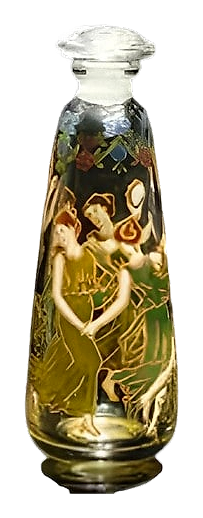
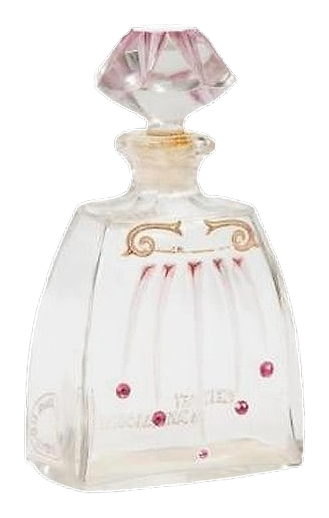
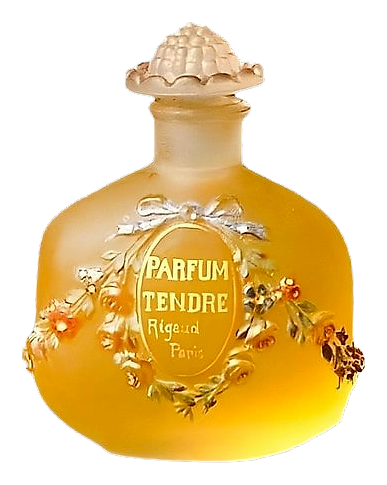
RigaudRigaud is a French perfumery house with roots stretching back to 1852, when founder Jean-Baptiste François Rigaud settled in Paris. Born in Riom in 1829, Rigaud built a reputation for fine fragrance during the Second Empire era and grew to ship his perfumes across Europe and into the American market by the late 1860s. The house is remembered for a catalogue of evocative scent names spanning over a century, from Des Roses (1908) and Mary Garden (1910) to Cupid's Darts (1914) and Parade (1932). In the mid-twentieth century, Rigaud turned its perfumery skill toward an unexpected medium: wax. The house became associated with the early development of the perfumed candle, producing scents that found their way into some of the most prominent interiors of the twentieth century.
The Creator
Henri RigaudRigaud built a signature rooted in classical French perfumery while remaining open to exotic influences sourced through international trade. His compositions leaned on rich, warm materials drawn from the South of France and from further afield, crafted to suit a global clientele.