
The Story
Why it exists.
The beginning
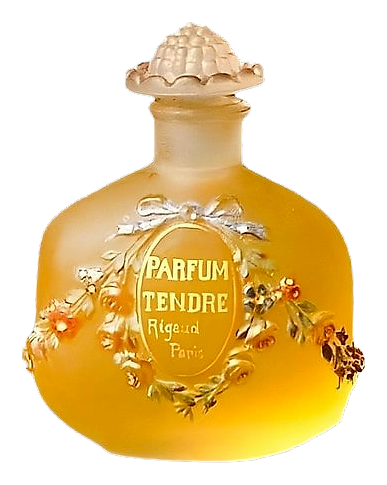
Parfum Tendre arrived in 1925, a composition carrying the Rigaud name during a period of rich creative output from the house. Henri Rigaud composed within a lineage that produced fragrances with carefully chosen names, building a catalogue that included releases reaching into the early twentieth century. Parfum Tendre, meaning "tender perfume," sits as a soft-spoken floral designed for the woman who preferred grace over spectacle. Its name alone signals its intention, a fragrance meant to whisper rather than announce itself, to linger close and ask for attention only when sought. Production was apparently discontinued, which only deepens its mystique for those who encounter it now.
What makes a 1925 floral like Parfum Tendre worth revisiting is its refusal to perform. Rather than reaching for loud statements or heavy-handed gestures, this composition stays committed to a soft, rounded identity that lets the floral character speak for itself. The structure reveals a careful balance from the very first moments, where delicate top notes give way to a more grounded heart, and the base settles into something warm, close, and quietly persistent. It's a formula that prioritizes intimacy over projection, and that restraint is precisely what gives it lasting character.
The evolution
The opening arrives with a quiet confidence, an immediate impression of warmth that draws you in without asking anything of you. It reads as the overture, a brief moment of introduction that sets a gentle tone before the composition begins to unfold. Within the first half hour, the top notes soften and the heart begins to take over, easing into a floral character that feels both classic and distinctively of its period. That mid-stage reading is where the composition truly settles into itself: gentle, rounded, and complete, a floral accord that never tries to dominate but simply exists with a kind of persuasive charm. Then the drydown takes over, and this is where Parfum Tendre becomes most itself. The base deepens into a warmth that clings close to skin, everything pulling inward to an intimate finish. Wearing this is a study in patience.
Cultural impact
Parfum Tendre survives now as a quiet artifact of Rigaud's early twentieth-century catalogue, a composition that captured something the wearer could return to again and again. Now discontinued, it offers a glimpse into a particular kind of floral that valued subtlety and emotional resonance over louder statements. It remains a composition for those who appreciate nuance, who find satisfaction in what stays close rather than what travels far.
The House
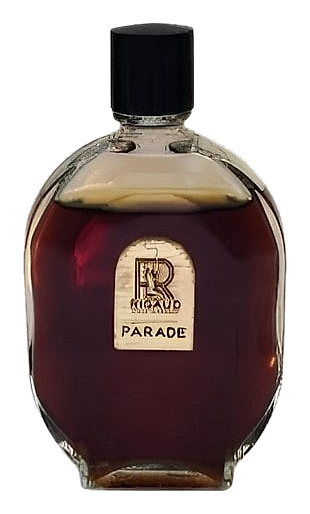
RigaudRigaud is a French perfumery house with roots stretching back to 1852, when founder Jean-Baptiste François Rigaud settled in Paris. Born in Riom in 1829, Rigaud built a reputation for fine fragrance during the Second Empire era and grew to ship his perfumes across Europe and into the American market by the late 1860s. The house is remembered for a catalogue of evocative scent names spanning over a century, from Des Roses (1908) and Mary Garden (1910) to Cupid's Darts (1914) and Parade (1932). In the mid-twentieth century, Rigaud turned its perfumery skill toward an unexpected medium: wax. The house became associated with the early development of the perfumed candle, producing scents that found their way into some of the most prominent interiors of the twentieth century.
The Creator
Henri RigaudRigaud built a signature rooted in classical French perfumery while remaining open to exotic influences sourced through international trade. His compositions leaned on rich, warm materials drawn from the South of France and from further afield, crafted to suit a global clientele.