
The Story
Why it exists.
The beginning
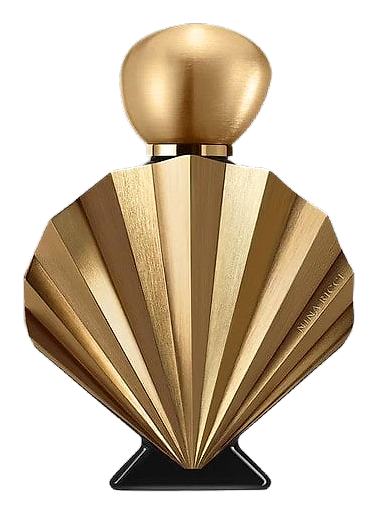
Vénus Eau de Parfum Intense is the name Nina Ricci gave to a different kind of femininity: not the pared-back whisper of L'Air du Temps, but something fully sunlit. Launched in 2025, the composition reads as florality with radiance, but radiance that lingers, that earns its warmth past the first hour. Perfumer Alexandra Monet co-created it alongside Master Perfumers Nathalie Lorson and Olivier Cresp, building a fragrance around a light-and-dark contrast that feels deliberate and full-bodied. The brief, from what reads in the brand's voice: a white floral with solar warmth, but one weighted by resin and vanilla so it never feels weightless or transient.
What sets this composition apart is the tiare and patchouli pairing. Tiare carries that creamy, almost suntan-slicked sweetness, a white floral with body and warmth. Patchouli, when paired with it, does something unexpected: it adds depth and a slightly ambery resin character without dragging the scent into territory it doesn't belong. The blackcurrant liqueur top lends a boozy fruit-smoothness that reads polished rather than syrupy, brightened further by a mandarin lift that keeps the opening from collapsing under its own richness.
The evolution
The opening belongs to the fruit. Blackcurrant liqueur gives the first impression a dark, jammy sweetness, and the mandarin keeps it from going heavy, lifting the top with a zesty brightness. There's almost a cocktail-glass quality to it, the kind of richness that announces itself before softening. The tiare arrives as the fruit mellows, big, creamy, unmistakable. It brings the jasmine and magnolia with it, and together they hold the heart with a presence that fills a room. The patchouli starts threading in during this phase, adding a quiet resin anchor underneath, something grounding that keeps the florals from feeling airborne. Then the drydown: benzoin and bourbon vanilla settle into something warm and golden, an amber-traced softness that clings to skin and fabric. On a scarf or a collar, what's left the next day is a soft, vanillic amber trace. Close. Intimate.
Cultural impact
Vénus Eau de Parfum Intense pulls most strongly in fall and winter according to seasonal voting data, though it reads as wearable well beyond those months. The tiare-and-vanilla pairing gives it a sunlit warmth that contrasts with its heavier base, and the patchouli keeps the composition from drifting into something too simple or sun-drenched. It feels like a white floral with a darker undertow, the kind of scent that suits both bare shoulders and a wool coat. The Nina Ricci signature is visible throughout, a softness in the florals, a polish in the construction, and just enough resin and vanilla to give the whole thing weight.
The House
Nina RicciNina Ricci is a Parisian fashion house founded in 1932 by Italian-born designer Maria "Nina" Ricci and her son Robert Ricci. The house began as a couture salon on Rue Haussmann, quickly establishing a reputation for refined, feminine gowns with romantic sensibility. Robert established an in-house perfume division in 1941, though the first fragrance would not arrive until 1946. That inaugural scent, Coeur Joie, marked the beginning of a partnership with Lalique that would define the house's olfactory identity. The house introduced its most celebrated fragrance, L'Air du Temps, in 1948, a scent that remains in production decades later. Puig acquired Nina Ricci in 1998, bringing the house under the same ownership that manages Carolina Herrera and Jean Paul Gaultier. Today, the fragrance collection spans from timeless classics to contemporary offerings like the Nina line, maintaining the house's commitment to feminine elegance.
The Creator
Alexandra MonetHer technique leans on a structured layering of top, heart, and base notes, yet she often subverts expectations by introducing a single, unexpected accord that shifts the fragrance’s direction. Alexandra favors natural extracts—bergamot, neroli, and Tuscan lavender—paired with…