
The Story
Why it exists.
The beginning
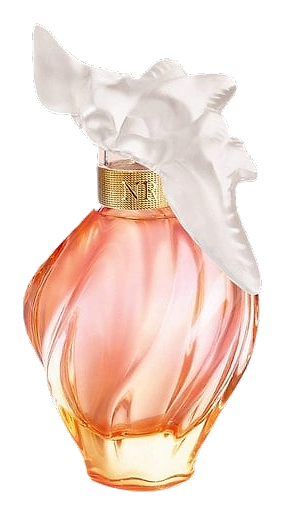
L'Air du Paradis arrives in 2018 as a new chapter in Nina Ricci's fragrance collection. The house has long traded in romantic femininity, the kind that doesn't announce itself but fills a room. The composition centers on passion fruit, lime, frangipani, and jasmine, a quartet of notes chosen for their vivid character and natural resonance. These ingredients work together to create something that feels both immediate and layered, a fragrance built on specificity rather than abstraction. The result is a scent that captures tropical warmth without veering into fantasy, grounded in real olfactory presence that feels tangible against the skin.
What makes this pyramid interesting is the tension between the tropical sweetness of frangipani and the sharp, almost electric brightness of passion fruit and lime. The lime prevents the composition from becoming overly creamy. It cuts through the richness, giving the opening an edge that keeps the fragrance from becoming purely decorative. The jasmine then does what jasmine does best: it arrives slowly, warm and indolic, and holds the composition together as it unfolds.
The evolution
The opening is all brightness, passion fruit and lime hitting the skin with the urgency of morning sun through curtains. It's tart, almost acidic, the kind of first impression that demands attention. Within fifteen minutes, the frangipani begins to soften the edges. The jasmine follows, creeping in quietly. By the hour mark, the composition has shifted entirely: warmer, fuller, the citrus retreating to the background where it becomes a memory rather than a statement. The drydown settles into something close and intimate, woody warmth that lingers on clothes long after the initial brightness has faded. This is a fragrance that evolves rather than announces, revealing different facets as time passes.
Cultural impact
L'Air du Paradis occupies a specific corner of the Nina Ricci catalog: limited edition, 2018 release, and largely overlooked outside of those who sought it out. It's tropical without apology, feminine without preciousness. The fragrance represents an interesting entry in the brand's offerings, capturing a particular mood and moment that distinguishes it from more mainstream releases in the collection.
The House
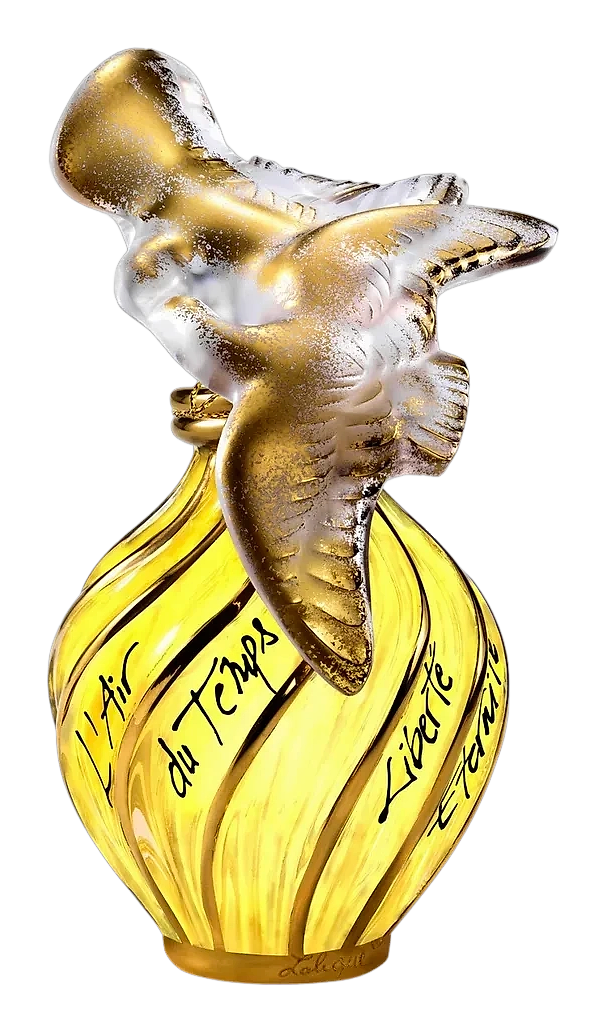
Nina RicciNina Ricci is a Parisian fashion house founded in 1932 by Italian-born designer Maria "Nina" Ricci and her son Robert Ricci. The house began as a couture salon on Rue Haussmann, quickly establishing a reputation for refined, feminine gowns with romantic sensibility. Robert established an in-house perfume division in 1941, though the first fragrance would not arrive until 1946. That inaugural scent, Coeur Joie, marked the beginning of a partnership with Lalique that would define the house's olfactory identity. The house introduced its most celebrated fragrance, L'Air du Temps, in 1948, a scent that remains in production decades later. Puig acquired Nina Ricci in 1998, bringing the house under the same ownership that manages Carolina Herrera and Jean Paul Gaultier. Today, the fragrance collection spans from timeless classics to contemporary offerings like the Nina line, maintaining the house's commitment to feminine elegance.
The Creator
Calice BeckerBecker's olfactive signature is marked by exceptional versatility combined with a distinctive feminine sensibility. She moves effortlessly between the sun-drenched radiance of Dior J'Adore and the contemplative tea notes of By Kilian Imperial Tea.