The Story
Why it exists.
The beginning
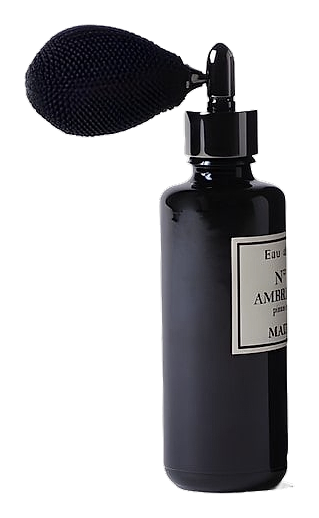
No. XIV Ambre arrived in 2010 as a focused meditation on a single idea: what amber smells like when it's not chasing sweetness. The composition opens with a bright lift of citrus that pulls it out of the usual oriental gravity, a clean, almost mineral flash before anything heavier settles in. From there, iris and rose introduce a powdered softness, lending the heart a slightly cold, makeup-tinged veil that feels deliberate rather than decorative. Underneath, labdanum, tonka, and vanilla flower do the heavy lifting, building a warm resinous body that smolders rather than glows. Guaiac wood and patchouli anchor the base, introducing a darker, slightly smoky undertone that prevents the sweetness from ever tipping over.
Most amber fragrances build on labdanum, benzoin, and vanilla alone, and that formula has become almost generic. No. XIV does something different by smuggling in citrus as the lead voice, plus ginger in the base. The ginger is the surprise. It breaks the sweetness with a clean, almost peppery edge that keeps the drydown from collapsing into something you could find at any counter. The combination of vanilla flower, tonka, and labdanum, with guaiac wood threading underneath, makes this feel closer to an old library shelf than a dessert plate. It's amber rewritten for someone who usually skips the genre.
The evolution
The first five minutes are the most deceptive part. Mandarin, orange, and grapefruit arrive brighter than you'd expect from something called Ambre. They don't last long. Within 30 minutes the citrus steps aside and the iris shows up, bringing a cool, almost metallic powder that cuts through the sweetness like graphite on paper. Rose enters somewhere in this window, soft and slightly waxy, the kind of rose that smells more like a face powder than a bouquet. By the one-hour mark, the base is fully in charge. Labdanum thickens everything, tonka bean adds that recognizable almond-hay warmth, and vanilla flower rounds the edges without making things cloying. The ginger is the last thing you notice in the base, a slow heat that builds under the amber rather than announcing itself. Guaiac wood and patchouli settle underneath, giving the whole thing a smoky undertone, almost like a fireplace that's been out for an hour. What remains after six hours is surprisingly close to the skin. The sillage is moderate: it projects for the first two or three hours, then pulls in.
Cultural impact
No. XIV Ambre pulls amber away from syrup and closer to incense, occupying a corner of the genre that often gets overlooked in favor of sweeter, more confectionary takes on the note. It rewards wearers who usually skip the genre, offering something drier, dustier, and more mineral than the usual oriental template. Cold weather, candlelight, and the kind of spaces that smell like old wood rather than new perfume tend to bring out the best in this composition. The contrast between the bright, almost chalky opening and the heavier resinous base gives it a versatility that feels unusual for the category.