The Story
Why it exists.
The beginning
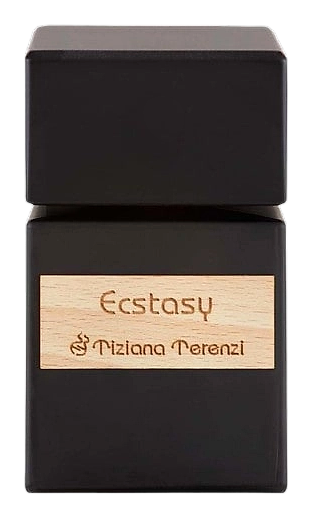
Ecstasy arrived in 2012 alongside three companion fragrances, XIX March, Gold Rose Oudh, and White Fire, marking Tiziana Terenzi's first foray into extrait de parfum after generations of candlemaking. Paolo Terenzi composed all four as a suite exploring what the house calls 'the four stages of a journey consumed by fire.' Each fragrance represents a different relationship with flame: its warmth, its hunger, its transformation of everything it touches. Ecstasy, specifically, translates the experience of the most intense stage, the peak, the overwhelming, the sensation of something surpassing ordinary experience. The name isn't hedonistic in this context. It's mystical. The brand's own copy describes it as the fragrance of 'the most intense journey,' and the visual labeling reinforces this: Ecstasy carries a wood label, part of the 'white soul' pair in the collection. Not darkness, not conflict, clarity through intensity.
What makes Ecstasy distinctive within its own collection is the way it handles conifer notes, spruce and pine don't appear as top-note formality here. They arrive as atmosphere. The stone powder (pebbles) in the opening does actual work: it provides a mineral counterweight to the evergreen, preventing the fragrance from sliding into masculine-fresh territory and keeping it grounded in something more contemplative. Then the heart layers frankincense not as a fog but as a thread, present, smoky, but never overpowering. The rose and violet appear quietly, softening what could have been austere.
The evolution
The opening hits like cold air off a forest path, spruce and pine asserting themselves, but with a mineral snap underneath (the pebbles) that keeps it from smelling like a Christmas candle. Fifteen minutes in, the evergreen softens and the frankincense begins to unspool, smoky and slightly sweet, threading itself into the conifer without overwhelming it. The rose and violet arrive quietly, not as a floral heart so much as a gentle warmth. This is where the fragrance decides what it wants to be: contemplative, not theatrical. By the second hour, the base notes begin their slow take-over. Sandalwood and amber provide a warm foundation while the labdanum adds a resinous depth that smells like old wood in afternoon light. The soil tincture, that Bakhoor note, lingers particularly long, giving the drydown a faintly earthy quality that stays close to skin for hours. On fabric, expect a faint whisper of pine and smoke the next morning. On skin, it settles into something intimate, barely detectable by anyone not standing close, which is exactly right for this fragrance.
Cultural impact
Ecstasy sits comfortably in the tradition of contemplative resinous-woody fragrances, comparable to incense-forest compositions from houses like Serge Lutens, Kilian, or Ormonde Jayne. The fragrance occupies a specific niche: it appeals to wearers who want something quiet and introspective rather than bold and communicative. Community reception is consistent: this is the kind of fragrance that people who love it describe in terms of place and memory ('old monastery,' 'forest path after rain') rather than notes. The 'white soul' labeling in the Classica collection positions it as the introspective counterpart to the 'black soul' pair, less confrontational, more meditative. It's a fragrance for someone who treats scent as ceremony.