The Story
Why it exists.
The beginning
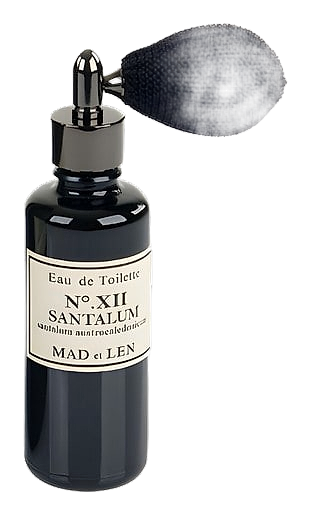
Santalum, the Latin name for sandalwood, appears as entry number twelve in Mad et Len's catalogue. The Roman numeral marks sequence, not hierarchy. This is a house that numbers its releases rather than naming them, treating each fragrance as one observation among many rather than a singular statement. Santalum arrived in 2010, a year when the house was still establishing its identity within the niche market. The scent presents sandalwood in its most direct form, the creamy, slightly sweet woodiness arriving with quiet confidence. There is no attempt to complicate or reinterpret. The fragrance simply offers what the material provides, allowing the natural warmth and subtle nuances of sandalwood to speak without interference.
What makes a sandalwood soliflore compelling is the same thing that makes any monochromatic composition interesting: the material's internal complexity. Good sandalwood isn't one-dimensional, it shifts between creamy, balsamic, and slightly smoky depending on the source and the extraction. Mad et Len's approach allows that natural variance to surface rather than suppressing it beneath supporting notes. The result is a fragrance that feels honest rather than engineered. The powdery accord mentioned in community classifications likely emerges from the wood's own character as it settles, this isn't powder added to sandalwood, but sandalwood revealing a facet that less-focused compositions would obscure.
The evolution
The opening arrives without ceremony. Not sharp, not bright, just immediate. A cream-colored presence that holds its shape rather than blooming outward. Within the first hour, the wood deepens slightly, the warmth intensifying as the volatile top notes dissipate and the heart material reveals itself. This middle phase reads as more intimate than the opening, the fragrance settling closer to skin, the powdery character emerging as the sharper edges soften. By hour three or four, the drydown settles into something quieter but persistent. The sillage moderates to close, almost conspiratorial, but the longevity proves substantial throughout the wear. What develops over time is a subtle evolution, the initial creaminess giving way to a drier, more essential wood character that lingers without overwhelming.
Cultural impact
No. XII Santalum represents a deliberate choice in a market that often favors complexity. The soliflore format offers something different: a fragrance that asks the wearer to engage with a single material rather than a constructed pyramid of notes. The sandalwood used here presents its creamy, warm character without the support of other materials, which can make the experience feel more direct and focused. Some wearers find this purity appealing, preferring to understand a single note fully rather than navigating layered compositions.