
The Story
Why it exists.
The beginning
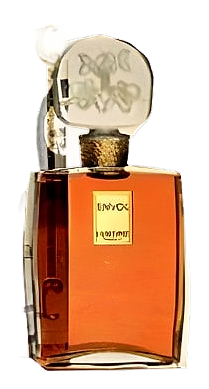
Envol arrived in 1957 under the direction of Armand Petitjean, who founded Lancôme two decades prior. The name alone reveals the intent: envol means flight, escape, the moment feet leave the ground. Envol represented something lighter than the romantic extravagances that dominated post-war perfumery. Petitjean's vision brought movement and air to a house already known for elegance. This was fragrance as ascent, a character that distinguished it from the heavier compositions of its era.
What distinguishes Envol is its green-floral structure, an accord built with intention and precision. Jasmine lifts the composition with its ethereal floral character. Oakmoss grounds it with an earthy depth that prevents any sense of heaviness. Rose provides the connective tissue between these elements, allowing the jasmine and oakmoss to converse rather than compete. The result reads today as remarkably modern, a fragrance that achieves lightness without sacrificing substance.
The evolution
The opening hits green, not citrus-bright but stem-green, the scent of crushed leaves on a cool morning. Jasmine arrives within minutes, softening the sharpness, carrying the composition upward. Rose blooms alongside something earthier, the oakmoss asserting its presence without tipping into mustiness. Soon the drydown takes over, musk and woody notes creating a soft trail that persists for hours, intimate rather than announcing. This is where Envol earns its name. A whisper that outlasts a shout.
Cultural impact
Envol occupies an interesting position in perfumery history, a green floral from the mid-20th century that showcases a different era of compositional freedom. The interplay of jasmine, rose, and oakmoss reflects ingredients used with a particular character that feels distinct from much of what followed. This discontinued fragrance represents a moment in scent design when perfumers worked with botanical combinations in ways that seem both familiar and noticeably different today.
The House
LancômeLancôme stands as one of France's most enduring luxury beauty houses, a name synonymous with elegant femininity and the art of French perfumery. Founded in 1935 by Armand Petitjean, the house emerged during economic uncertainty with a clear mission: to bring prestige back to beauty after witnessing the mass-market drift of his former employer. Today, operating under L'Oréal's luxury division, Lancôme balances heritage with modernity, crafting fragrances like La Vie Est Belle and Trésor that have become global icons while maintaining the golden rose emblem that has marked its bottles for nearly ninety years.
The Creator
Armand Petitjean & Jean HervelinIn the lab Petitjean favored classic French ingredients—bergamot, jasmine, and oak‑aged sandalwood—paired with unexpected accents from his travels, such as Moroccan ambergris or Turkish rose oil. He built structures around a clear heart, often anchoring a fragrance with a sing…