Armand Petitjean
Armand Petitjean entered the world on May 30, 1884, in the distiller’s village of Saint‑Loup‑sur‑Semouse. Growing up among copper stills gave him an instinct for raw materials, but his ambition soon outgrew the Rhône valley. In his twenties he left France, first trading essential oils in North Africa, then managing export accounts for the French perfume house Coty. By the early 1930s he had built a network that spanned Europe, the Middle East, and the Americas. At fifty, after a decade of negotiating shipments and tasting blends for Coty, he partnered with Guillaume d’Ornano to launch a boutique that would become Lancôme. The shop opened in 1935 on Paris’s rue Royale, offering a curated selection of cosmetics and a handful of fragrances that reflected Petitjean’s belief that beauty should empower the wearer. The brand’s early success rested on his ability to translate the precision of a distiller’s lab into the elegance of a Parisian salon, a skill that kept him active in fragrance creation until his passing.
The hits
Notable creations
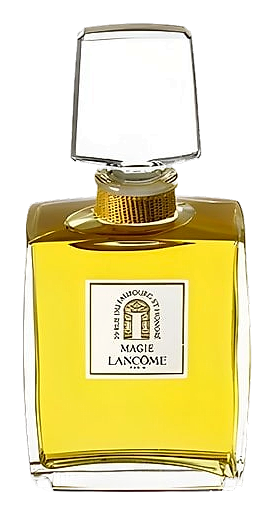

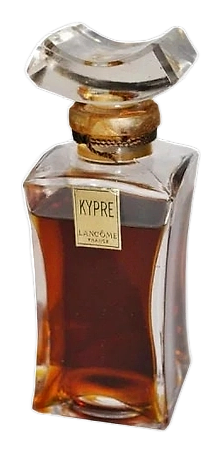
The signature
How Armand composes
In the lab Petitjean favored classic French ingredients—bergamot, jasmine, and oak‑aged sandalwood—paired with unexpected accents from his travels, such as Moroccan ambergris or Turkish rose oil. He built structures around a clear heart, often anchoring a fragrance with a single, luminous note that acted as a compass for the surrounding layers. His technique emphasized precision: each drop measured, each accord tested for harmony before moving forward. The result reads as a refined composition, where elegance never feels forced and every element serves a purpose.
Philosophy
What drives Armand
Petitjean treated perfume as a dialogue between memory and modernity. He believed a scent should capture a moment—an afternoon in a Provençal garden, the sparkle of a Parisian soirée—while speaking to the confidence of the present. Rather than chasing novelty for its own sake, he let the story of the wearer guide the composition. He trusted that a well‑balanced accord could lift a spirit, turning everyday rituals into acts of self‑affirmation. This conviction shaped every bottle that left his workshop, embedding a quiet resolve that beauty, when worn, becomes a personal declaration.
The houses
Maisons Armand composes for
In the same league