The Story
Why it exists.
The beginning
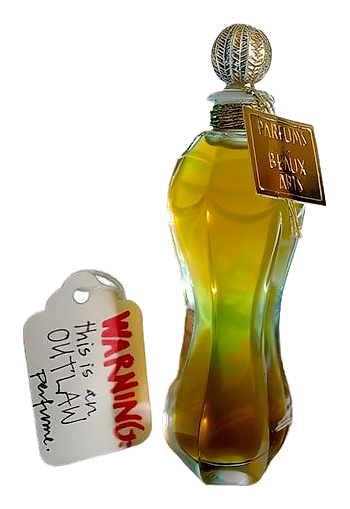
Mata Hari was born from collaboration. In 2010, DSH Perfumes partnered with the Natural Perfumers Guild on the Outlaw Project, a collection devoted to natural ingredients most perfumers had abandoned. Dawn Spencer Hurwitz anchored those materials in a real figure: Margaretha Zelle, the exotic dancer executed as a notorious double spy. Hurwitz found her way to Mata Hari through the Greta Garbo film and the perfume counters of 1920s Paris, where fruits, florals, and chypre structures defined the decade's idea of seduction. The composition channels both. Juicy fruits for the sensuality. Oakmoss and leather for the power that got her killed, or made her legendary. The kind of duality classical chypres used to wear without apology.
Mata Hari commits to both fruit and animalic intensity without apology. The fruity elements aren't decorative. Blood orange, davana, and blackcurrant bud sit in the same room as cumin, costus, and a genuine animalic undertone, materials that give the composition its raw, almost unsettling character. As a 100% botanical perfume, there are no synthetic aromachemicals to smooth the edges or sand down the strangeness.
The evolution
The opening belongs entirely to citrus and green herbs. Blood orange, neroli, tarragon, galbanum, the brightness almost Mediterranean, sharp and aromatic in a way that recalls sunlit courtyards and bitter herbs crushed between fingers. Then the fruit sweetens into something darker, and the florals arrive heavy. Tuberose absolute, champaca, Bulgarian rose otto, jasmine sambac. The heart turns dense and almost narcotic, undercut by cinnamon leaf and clove, a spiced warmth that pushes the composition toward the exotic rather than the demure. As the hours pass, the chypre architecture takes hold. Oakmoss, patchouli, leather, labdanum anchor everything to skin and earth, the bitter green of the moss threading against the sweeter resinous warmth of the labdanum.
Cultural impact
Mata Hari occupies an unusual niche in contemporary perfumery. It's a classical chypre built from banned natural ingredients, a rare choice in a landscape dominated by synthetic-friendly compositions and reformulated classics. The fragrance appeals to wearers who want something that smells like a 1920s Parisian perfume counter rather than a modern release, a scent that carries the architecture of an earlier era without resorting to literal vintage replication. There's a connoisseur appeal at work here.