
The Story
Why it exists.
The beginning
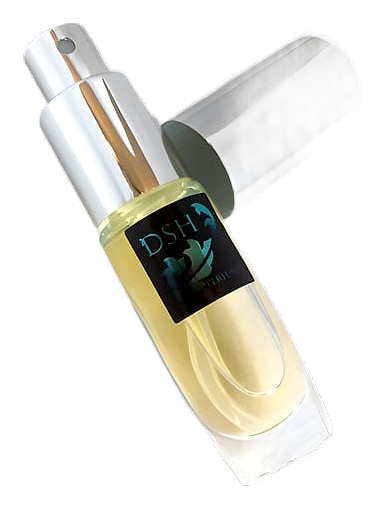
The Voices of Trees began as an evolution. Dawn Spencer Hurwitz had already created Seve de Pin, her original pine sap design, but wanted to push further into the forest experience. The addition of maple leaves, sycamore, and an expanded bark-y, pine amber accord transformed the original into something that captured not just the tree, but the whole woodland: the mix of evergreen and deciduous, the scent of deep autumn settling into the air. Released in 2015, it joined a growing body of work that treats each fragrance as a quiet study rather than a commercial statement. This one just happens to smell like somewhere specific.
Pinyon pine resin appears in all three phases of the pyramid, top, heart, and base. That architectural choice is unusual. Most fragrances shift dramatically between stages; this one keeps a continuous thread of cool, sharp pine throughout the entire arc. The botanical formulation (98.5% natural) creates a certain translucency, you can smell the individual layers without them muddying together. The freshness of neroli and poplar bud absolute at the opening gives way to labdanum's honeyed resin, and then the drydown's fossilised amber and opoponax create a slightly smoky, almost ceremonial warmth. The result is a fragrance that moves from cool air to close-to-skin warmth without ever losing its forest identity.
The evolution
The opening hits cool and sharp. Pinyon pine resin announces itself without apology, and neroli cuts through with a brief citrus brightness. The maple leaf arrives almost immediately, that unexpected green sweetness that keeps the forest from becoming one-note. Poplar bud absolute adds a quiet, slightly medicinal dimension. The heart becomes a slow burn. The pine resin remains, but it deepens, wrapping around sycamore maple's woody warmth and Seville lavender's herbaceous quiet. Labdanum adds a honeyed, slightly animalic resin that pulls everything earthward. By the third hour, the drydown arrives: balsam fir and fossilised amber, muhuhu and opoponax, cedarwood settling underneath like a forest floor after rain. That pine resin thread? Still there. Faint, but unbroken. The amber stays warm and close to skin for hours. On fabric, the drydown can persist into the next morning, a faint trace of bark and resin that smells like the forest remembered you.
Cultural impact
The Voices of Trees occupies a specific corner of niche perfumery, for those who've grown tired of conventional seasonal fragrances and want something with genuine forest character. It's not a "woodsy" fragrance in the marketing sense. It's the real thing: resinous, green, and botanical. The reception has been notably positive, with wearers describing it as exactly what a forest should smell like. The botanical formulation (98.5% natural) means it performs differently on each wearer, the same transparency that makes it feel authentic also makes it variable.