The Story
Why it exists.
The beginning
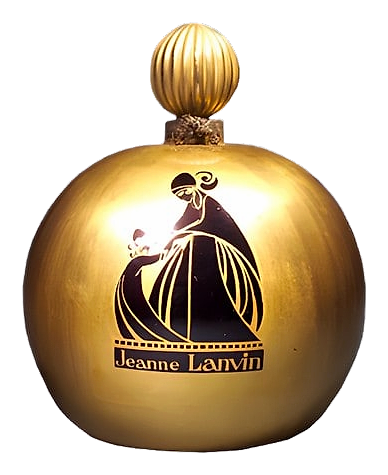
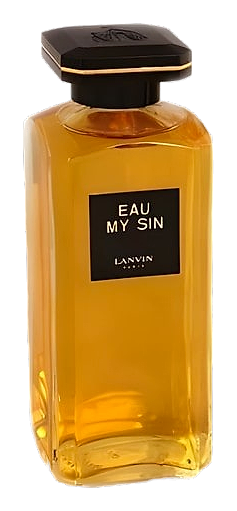
Mon Péché, French for 'my sin,' entered the Lanvin catalogue as an early fragrance, a moment when the house was still translating its couturier sensibility into something wearable. The perfumer built it with an architect's discipline: every note arranged, every accord earning its place in the structure. The name itself carried a charge. Sin, in the Roaring Twenties, from a house synonymous with Parisian elegance. The audacity was part of the offering, a scent that named its own transgression before the wearer had to. The Eau de Toilette now known as Eau My Sin arrived in 1971, carrying the same name and a softer architecture for a new decade.
The composition reads as a masterclass in controlled excess. Orris root and iris anchor a dense heart, rose and jasmine threading through the top of the accord while ylang-ylang, tuberose, carnation, and geranium build a bouquet that functions as one voice rather than a crowd. Each bloom contributes texture without fighting for the solo, the florals compressing into something that smells composed rather than assembled. The aldehydes in the opening carry a different temperature than the genre's more famous examples.
The evolution
The first ten minutes are sharp, almost confrontational. Aldehydes hit like cold water on bare skin, bergamot and neroli slicing through before you can catch your breath. The citrus brightens everything, the neroli in particular bringing a faint bitter-orange lift that softens the aldehydic blast without diluting it. Then the aldehydes step back and the iris arrives, cool and violet-tinged, carrying rose and jasmine behind it like a procession. The white florals thicken gradually: ylang-ylang adds its distinctive warmth, tuberose its creamy weight, until the whole thing feels like a garden compressed into a powder compact. Carnation's clove-spice edge threads through the middle, and the geranium lends its green, slightly mentholated lift, keeping the bouquet from turning cloying.
Cultural impact
Eau My Sin occupies a specific corner of the vintage fragrance landscape: an aldehydic floral from the early 1970s, built on a classical accord structure that feels increasingly rare in the modern market. Its appeal lies in the tension it holds, powdery florals layered over an animalic base, civet and styrax providing the friction that keeps the composition from feeling precious. The iris and orris root carry a violet-coolness through the heart, and the aldehydes lend a waxy, soapy lift to the opening that signals the genre at a glance.