Marie Zède
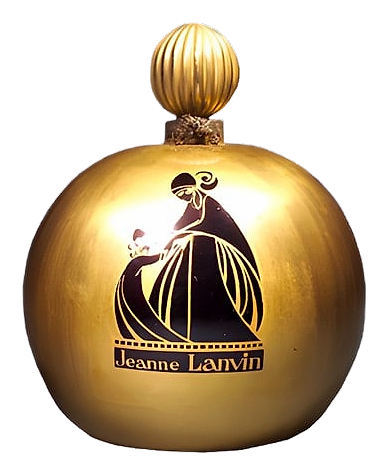
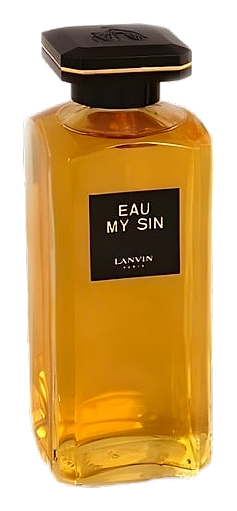
Marie Zède belongs to a generation of French perfumers whose names never quite crossed into the public eye, yet whose fingerprints rest on some of the most quietly influential fragrances of the twentieth century. Trained in the rigorous tradition of Grasse-adjacent perfumery, she built her career within the world of French fine fragrance houses, eventually lending her nose to Lanvin during a period of creative reinvention. Her most celebrated work, Jeanne Lanvin My Sin, arrived at a moment when the industry still allowed perfumers considerable room for personality, and the composition bears the hallmarks of that latitude: a confident, almost audacious balance of sweet, floral, and animalic accords that refused to behave like anything else on the dressing table. Zède's contribution sits within a small but distinguished lineage of women perfumers who shaped the postwar French olfactory canon, working steadily while their male counterparts often received the spotlight. Details of her early training and exact career chronology remain somewhat scarce in publicly available sources, but her association with one of Paris's most historic couture houses places her firmly within the capital's golden age of bespoke perfumery.
The hits
Notable creations

The signature
How Marie composes
Zède's signature rests in her willingness to push the honeyed, the resinous, and the indolic into territory that less confident hands might have softened. In My Sin, the bold tuberose and orange blossom opening gives way to a base rich in benzoin, vanilla, and what reads as a confident dose of civet or similar animalic material, a structure designed to age on skin rather than simply evaporate. Her preferred materials seem to skew toward the classical perfumer's palette: absolutes rather than reconstructed accords, natural florals given their full dramatic weight, and balsamic base notes that anchor the composition through the long drydown. She worked in the high-extract, eaux de parfum concentration tradition, building fragrances that demanded attention and rewarded it. The result is a style that feels unmistakably mid-century French in its bones, unapologetically opulent, and crafted for the woman who considered perfume an essential accessory to a life lived with intent.
Philosophy
What drives Marie
Zède's approach to fragrance, as evidenced through her surviving work, suggests a perfumer who believed in composition as character building rather than mere decoration. My Sin does not flatter or apologize; it enters a room with intent, layering rich florals over a warm, almost carnal base that lingers well past the point of polite acquaintance. This philosophy, that a fragrance should possess a point of view and defend it, was less common than one might assume in the era she worked. Rather than chasing the abstracted floral or the safe aldehyde, Zède appears to have favored tension: the interplay between innocence and provocation, sweetness and shadow. Her work speaks to a belief that a great perfume operates as a small piece of theater, one that changes the wearer as much as it charms the audience. She understood that longevity, both olfactory and cultural, comes from conviction rather than compromise.
The houses
Maisons Marie composes for
In the same league