
The Story
Why it exists.
The beginning
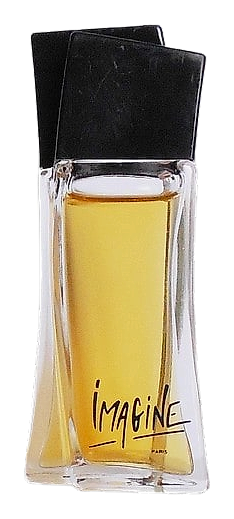
The name says everything. Released in 1989, Imagine arrived at a moment when the word still belonged to John Lennon, not just to marketing departments. The brand understood what it was naming, not a fantasy, but a provocation. A French fragrance house, Jean Louis Vermeil built compositions around a single dominant accord, trusting the structure to hold rather than overwhelming the senses with complexity. The result was a fragrance that refused to choose between fruit and warmth, instead letting both coexist in a tension that kept the wearer guessing. The opening burst of blackcurrant and pineapple hit hard, bright and tart, while underneath the oakmoss base slowly revealed itself like embers refusing to cool.
The structure earns attention. Ten top notes could easily collapse into noise, but the composition uses each one as a restraint on the others, bergamot cuts the sweetness of peach, thyme's herbal edge keeps blackcurrant from becoming jam, artemisia adds an almost medicinal coolness that makes the citrus feel intentional rather than default. The heart brings seven materials that most perfumers would consider too many, yet the florals don't crowd each other. Cloves prevent honeysuckle from going syrupy. Jasmine shares space with ylang-ylang without either asserting dominance. This is the house's quiet argument: that restraint isn't about fewer notes, but about knowing what each note is doing.
The evolution
The opening announces itself in seconds. Blackcurrant and pineapple arrive together, backed by enough citrus to keep the whole thing from sitting heavy on first spray. Thirty minutes in, the herbs arrive, artemisia and thyme cutting through the fruit like a cold glass of water. The florals take over around the one-hour mark, but they're not delicate. Clove-warmed rose and ylang-ylang give the heart a spice that keeps it from going powdery. By hour three, the oakmoss has established itself and the amber begins to build. The drydown is where this fragrance earns its reputation. Sandalwood, patchouli, and musk layer into something that stays close to the skin but refuses to disappear, lingering well beyond what most fragrances offer. What lingers isn't the fruit or the florals. It's the oakmoss and amber, warm and slightly earthy, like the memory of a room someone just left.
Cultural impact
Imagine has become a collector's item, discontinued but persistently sought after by those who remember it from the late 1980s. The fragrance's name alone triggers recognition; one reviewer noted the immediate association with John Lennon's anthem. What draws collectors back isn't nostalgia alone. The formula's commitment to full-strength fruit notes against a classical oakmoss base reads differently now, bolder than many contemporary releases. The undiluted opening and the dense, traditional base create a contrast that feels increasingly rare.