The Story
Why it exists.
The beginning
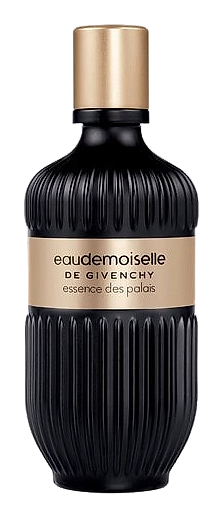
Essence des Palais, released in 2017, sits at the heavier end of the Eaudemoiselle line and treats the tension between softness and severity as its primary subject. The composition reads like an architecture of contrast. Incense and saffron at the threshold, dry and almost crackling. Rose and myrrh at the heart, the floral darkened by the resin until the two notes stop sounding like themselves and start sounding like a single material. Patchouli and cedar where the conversation ends, the kind of base that doesn't dissipate so much as anchor. The whole thing leans toward shadow rather than light, toward rooms lit by candles rather than windows, and the effect is less a perfume you spray on and more an atmosphere you step into.
What makes this composition worth a second look is the density of its resin. The benzoin and myrrh carry the structural weight, both materials with a viscous, almost candied depth that gives the fragrance its gravity. The saffron contributes a dry, slightly bitter heat that reads more like a spice than a sweetness, and it keeps the opening from tipping into the syrupy territory that ruins so many orientals in this register. Rose is here, but it isn't the rose of a daylight perfume.
The evolution
The opening belongs to saffron and ginger, dry-spiced and slightly abrasive, the leather sitting underneath as a low, almost tectonic layer. Incense arrives early and doesn't leave, threading through every phase of the wear. The rose opens as the spices begin to settle, and the composition shifts from a masculine-leaning spice profile into something that reads more like a study in contrasts: the rose is dark, almost jammy, and the myrrh underneath gives the whole arrangement a liturgical gravity. Benzoin sweetens the edges without softening them, a resinous sugar that adds warmth without tipping into the gourmand. As the hours pass, the saffron burns off and the rose quiets into something less obviously floral, more of a presence than a statement. What remains is the architecture: patchouli and cedar holding the walls up, tonka bean pressing the warmth down into something almost edible.
Cultural impact
Essence des Palais sits in a curious corner of the Givenchy catalog. It isn't the bright floral that gets recommended to first-time buyers, and it isn't the warm crowd-pleaser of the casual flank. It's the late-evening piece, the fragrance that lives in the shadow rather than the spotlight, and that placement gives it a sharper silhouette than most of its stablemates. Among oriental florals, it reads closer to a liturgical incense than to the syrupy gourmands that dominate the genre, and that gives it a kind of architectural clarity.