The Story
Why it exists.
The beginning
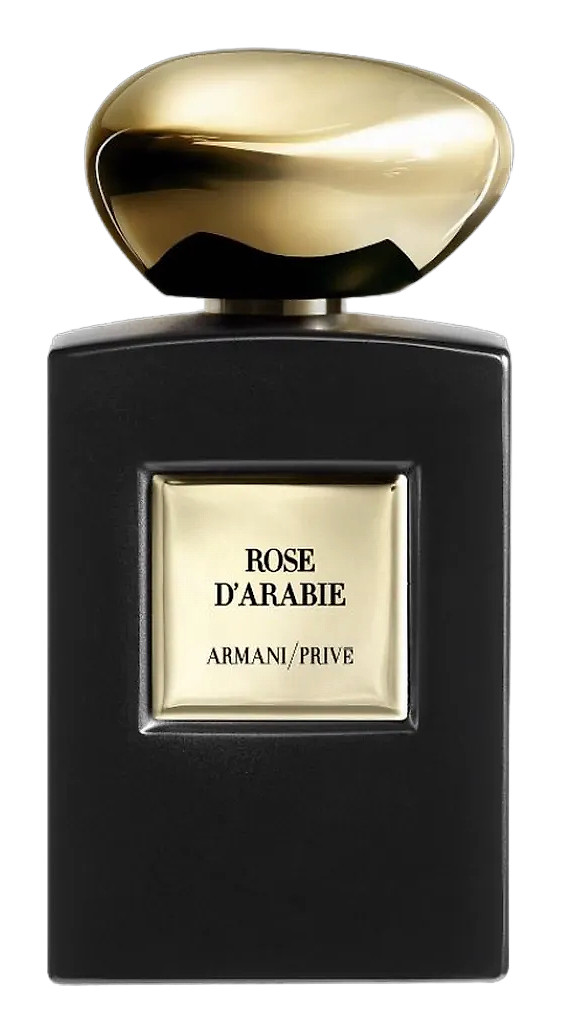
Rose d'Arabie is part of Les Mille et Une Nuits, Armani Privé's ode to the exotic mystery of the Orient, inspired by the medieval Arabic tales of 1001 Nights. Marie Salamagne, the perfumer, was tasked with translating the spirit of Arabian perfumery into something that could only be Armani. The concept: a rose that didn't apologize for its richness. In the Arab world, rose isn't delicate, it's volumetric, sun-drenched, and bold. Salamagne built from that premise, pairing Damascus rose with the deep, resinous character of oud and rounding it with vanilla warmth. The result was released in 2010 as one of three pillars of the collection alongside Oud Royal and Ambre Orient. Each bottle, black glass, gold stopper, was designed to feel like a sealed artifact.
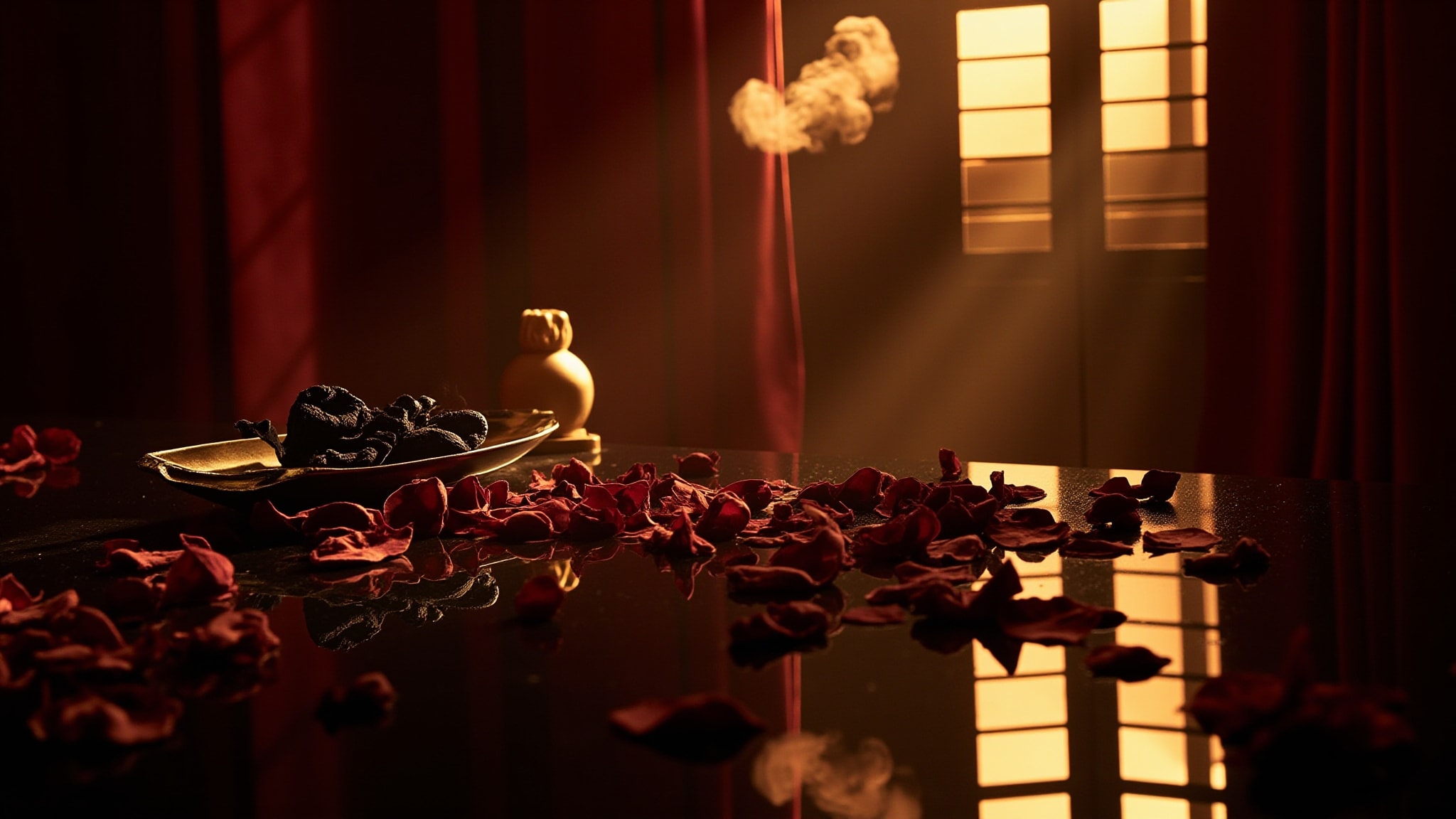
The pyramid is deceptively simple: saffron top, rose-wood-patchouli heart, amber-oud-vanilla base. But simplicity here is the point. Rather than layering complexity for its own sake, Rose d'Arabie commits fully to its central accord, rose and oud, done with enough conviction to feel singular. The saffron opening isn't decorative; it's the signal that this rose plays by different rules. It's warm spice, not green freshness. The patchouli adds an earthy, slightly smoky counterweight that keeps the rose from veering into something too precious. And the oud, present if not headline, brings the resinous depth that Arab perfumery demands.
The evolution
Saffron arrives first: dry, a little leathery, with that distinctive medicinal warmth that either hooks you or makes you pause for thirty seconds. It doesn't tease. It announces. Once you've adjusted, the rose moves in, not a crisp garden rose but something fuller, almost jam-like in its richness. The patchouli surfaces around the thirty-minute mark, adding an earthy undertone that keeps the sweetness honest. By the second hour, the drydown takes over: amber and vanilla blend into something warm and close, with oud lending its dark, resinous character to the base. On fabric, this lingers for hours, easily a full workday and well into the evening. On skin, expect moderate-to-strong sillage that draws people in rather than announcing from across the room. The next day, there's a faint warmth left on skin that feels less like residue and more like memory.
Cultural impact
Rose d'Arabie won Fragrance Foundation's Fragrance of the Year, Women's Luxury in 2014, cementing its place as one of the strongest entries in Armani Privé's Les Mille et Une Nuits collection. It's been widely discussed in fragrance communities for its particular brand of rose, not delicate, not polite, but something that takes up space. Wearers tend to either love it for its conviction or find it too concentrated, but the consensus is clear: this rose means business.