The Story
Why it exists.
The beginning
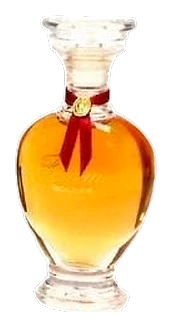
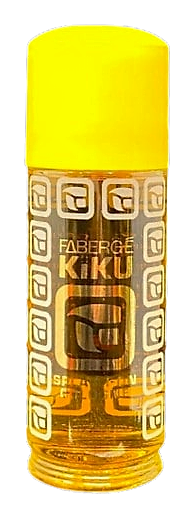
1967. The swinging decade in full bloom. American Fabergé, already a recognized name in fragrance production, brought Kiku to market as a new women's offering. The original brand copy couldn't have been more direct: "Kiku, like love, smooths her body, soothes her soul, embraces her whole being with long-lingering, spirit-sparkling scent." Shamelessly feminine, the advertisement declared, packaged in gleaming yellow bottles and gold-toned boxes that borrowed the jewel-house aesthetic for which the company was named. Kiku arrived at the intersection of mid-century optimism and American abundance, a cologne designed not as a whisper but as a complete statement of arrival.
What sets Kiku apart is the sheer generosity of its heart, a bouquet dense enough to spill over into territory that a typical floral cologne never reaches. Lily and ylang-ylang carry the white floral weight, while tiare and coconut deliver a creamy, sun-warmed quality more associated with tropical soliflores. Rose gives it backbone and softness at once, and orange blossom threads citrus and honey through the mix. That tropical edge gives Kiku its distinctive character: not a garden floral, not a chypre, something close to a holiday postcard turned into a scent.
The evolution
The first ten minutes belong entirely to the aldehydes and bergamot. A bright, sparkling burst, almost carbonated, the way light cuts across a gilt frame. It reads clean and a little soapy in the best possible way, the soapy warmth of expensive bathwater, not dish soap. Around the twenty-minute mark the florals arrive. Rose comes first, soft and rounded, then the white bouquet opens fully. Lily leads, cool and green-edged, ylang-ylang deepening the sweetness, tiare and coconut giving it that golden, sunlit warmth. Orange blossom weaves through like ribbon. This is the loudest phase, the one that fills a small room if you walk through it with intention. By the second hour the aldehydes have stepped back to their supporting role, and the woods and amber take over. Sandalwood smooths everything, oakmoss keeps it grounded in the late-1960s idiom, vanilla and amber round the corners.
Cultural impact
Kiku arrived on shelves the same year the Fabergé house was best known for its Brut men's line. It shares DNA with compositions like Arpège and No. 5, but wears its tropical heart more openly than either, an unusually lush register for a 1967 American cologne. The timing matters. 1967 sat at the high point of mid-century optimism, an era when perfumers still believed in generous sillage and unapologetic floral density. Kiku embraces that ethos completely, opening with aldehydes that sparkle rather than whisper, then steering the wearer into a heart built on white florals, rose, and a pronounced tropical accent.