The Story
Why it exists.
The beginning
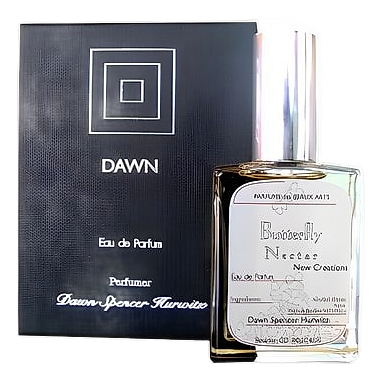
Butterfly Nectar came from Dawn Spencer Hurwitz, released in 2010. Her work draws on a deep bench of natural absolutes and essential oils, and this composition reads as a literal translation of a pollinator's experience. The question at its center is simple and old-fashioned: what does a flower smell like to the creature that feeds on it? Clover, honey, and fruit, rendered with the specificity of someone who has spent decades working with raw botanicals. There is a directness to the premise, almost academic in its curiosity. What results is less a fantasy of sweetness and more a documented study of nectar as it exists in nature: layered, vegetal, alive. Hurwitz approaches the material with the patience of a naturalist cataloging a single meadow through a full season.
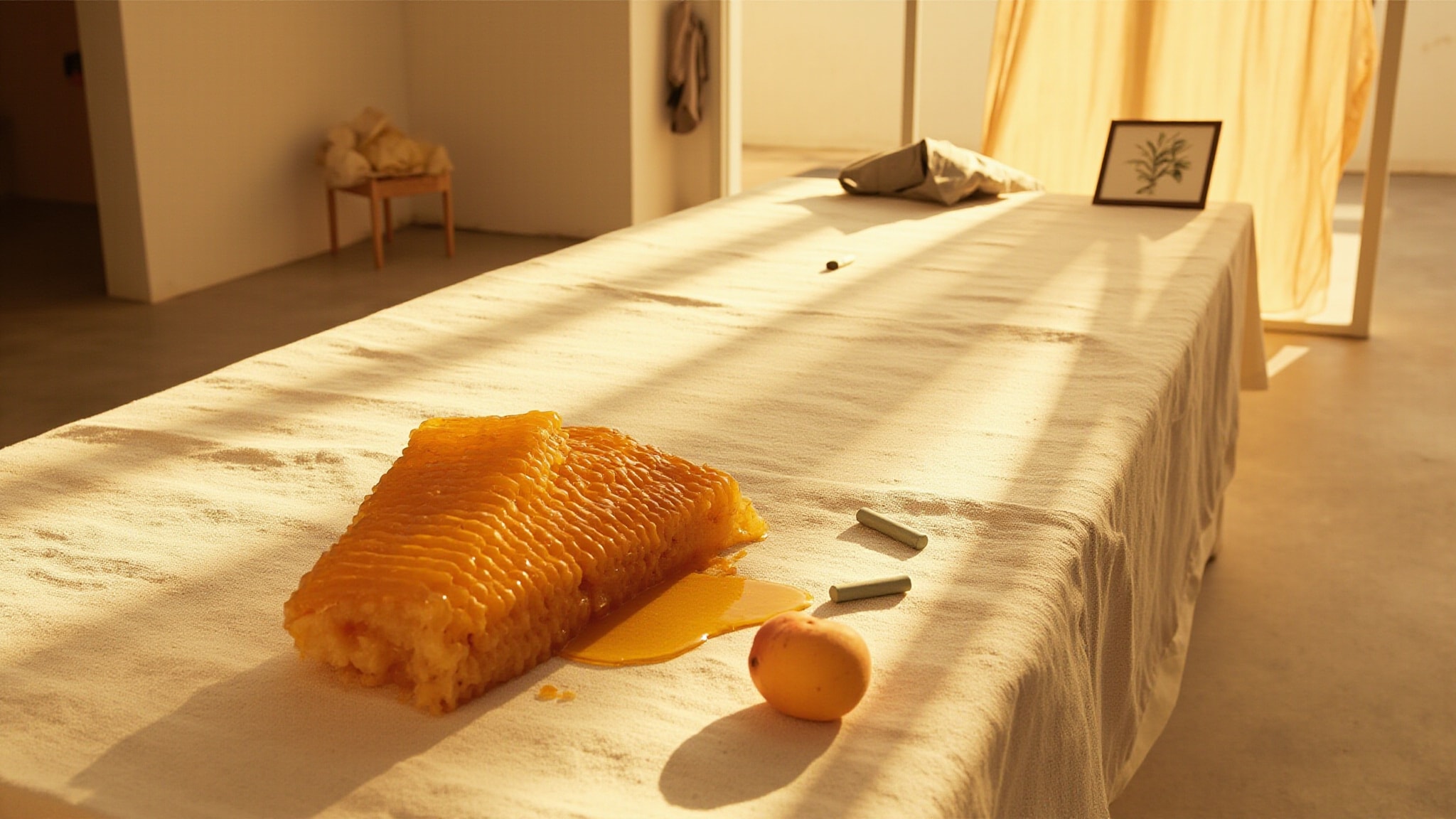
The unusual move here is the use of beeswax alongside actual honey. Most fragrances lean on honey as a sweet, sticky shorthand for nectar, but pairing it with beeswax gives the heart a waxy depth that reads more like an apiary than a candy jar. The Bulgarian rose absolute and orris root add a powdered floral gravity that keeps the sweetness from tipping into confection. The beeswax brings a structural warmth that honey alone cannot achieve, almost mineral in its density, grounding the composition in something tactile rather than edible.
The evolution
The first ten minutes are almost startlingly fresh: apricot, peach, and three expressions of citrus (Meyer lemon, green mandarin, vervain) crack open bright and clean, like biting into cold fruit on a summer morning. That brightness doesn't vanish, but it does make room. Within twenty minutes the beeswax arrives, dense and golden, dragging honey and jasmine along with it. The rose absolute and orris root settle underneath, giving the heart a dusty, almost vintage-powdered quality. It's not a linear fade so much as a layering, each phase revealing a new stratum of the composition. The base introduces civet and musk, and this is where the fragrance reveals its quieter register: those animalics sit underneath the honey like a low hum, pulling the whole thing toward skin rather than letting it float off into confection. Patchouli and benzoin add warmth and a faint resinous edge.
Cultural impact
Among indie collectors who favor naturals-driven compositions, Butterfly Nectar occupies a particular corner of the conversation. It is one of several DSH releases that lean botanical, and it tends to surface in discussions of honey-forward florals built around beeswax as a structural element rather than a sweetener. The fragrance attracts attention from wearers drawn to compositions that read as composed by hand, with the kind of texture and weight that comes from working with absolutes and natural bases.