
The Story
Why it exists.
The beginning
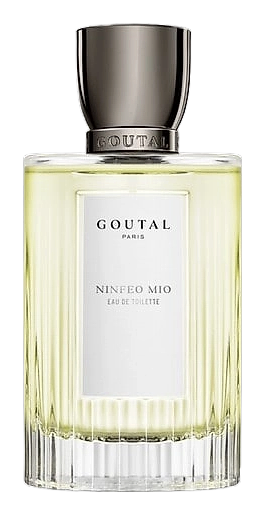
Ninfeo Mio takes its name from the Ninfeo gardens in Rome, those lush, secret-green spaces that offer water, shade, and an atmosphere older than the surrounding city. In 2010, Camille Goutal and Isabelle Doyen created the fragrance as a translation of that place: not a recreation of Roman gardens as postcards would have them, but the feeling of arriving in one. The real sensation of green. The specific quality of morning light filtered through leaves. The house has always treated perfume as diary entry rather than product, and Ninfeo Mio reads like a memory written in scent, one person's experience of a place, offered to anyone who wants to wear it.
What makes Ninfeo Mio unusual is how it handles the transition from citrus to green. Most fragrances treat these as separate acts, a bright opening, then a drydown that arrives like a different guest. Here, the handoff happens so gradually that the citrus never really leaves. The citron and bitter orange stay present throughout, threaded into the heart and base rather than vanishing after the top notes fade. This gives the composition a quality that's harder to name than to smell: it reads as green from start to finish, but the green never becomes sharp or herbaceous. Galbanum provides the lift, but the fig provides the softness, a milky, slightly aquatic quality that keeps everything from turning austere.
The evolution
The opening arrives quickly, citron and bitter orange make their entrance within seconds, bright and clean. The lemon tree wood appears here too, adding a woody undertone that prevents the citrus from reading as cleaning product. Within twenty minutes, the galbanum begins to assert itself, and the fig leaf arrives quietly, not announcing itself so much as gradually becoming the dominant sensation. The transition from opening to heart feels almost seamless. By the second hour, the green fig has fully arrived, creamy, slightly aquatic, with the mastic lending a faint resinous quality that keeps the drydown from reading as purely vegetal. The lemon tree wood reappears in the base, grounding everything in a warm, sappy woodiness that lingers. The sillage stays moderate, close enough to be noticed by someone leaning in, not strong enough to announce itself across a room.
Cultural impact
Ninfeo Mio participates in a longer conversation about how perfumery can capture place and atmosphere rather than simply smell. Created by Camille Goutal and Isabelle Doyen, the fragrance draws on green, garden-inspired traditions within French perfumery, while remaining distinctly its own composition. The scent offers an alternative to trend-driven fragrance creation, instead focusing on evoking a specific setting with precision and sensory detail. Its green character and naturalistic structure position it within a lineage of compositions that use botanical references not as decoration but as the primary language of the work.