The Story
Why it exists.
The beginning
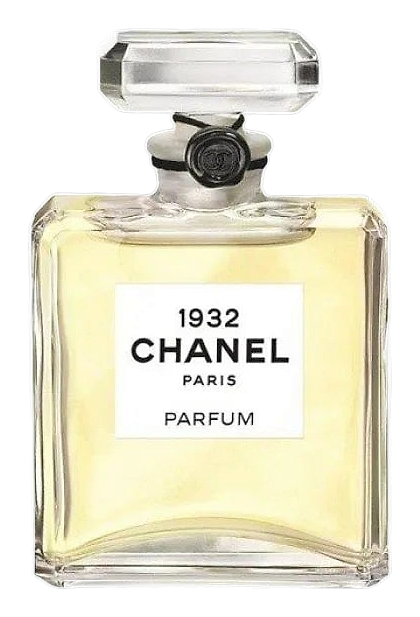
1932 is part of the Les Exclusifs de Chanel collection, composed by Jacques Polge and released in 2014. The fragrance sits firmly inside the aldehyde tradition that Chanel is most famous for. Where most houses treat aldehydes as a brief spark at the top of a composition, Chanel has built entire perfumes around them, and 1932 is one of the clearest examples of what happens when the technique is pushed to its logical endpoint. Polge, the house's in-house perfumer at the time, was working in a tradition the brand had effectively invented. The original N°5 proved that aldehydes could abstract a flower into something cleaner and stranger than nature produces.
The aldehyde opening is a direct line of inheritance from N°5, but everything around it pulls in a different direction. 1932 builds around a cooler floral geometry: ylang-ylang and carnation stacked against iris, opoponax, and frankincense in the base. The composition uses Iralia, a captive synthetic that smells of iris-rooted powder and green stems, to give the floral heart a stiffer spine. It's floral abstraction with cleaner bones and less sweetness. The result reads less like a perfume and more like a drawing of one. What separates 1932 from the rest of the Exclusifs line is its restraint.
The evolution
The opening is almost confrontational. Aldehydes hit hard over neroli and bergamot, lifting everything to a high, clear pitch that smells more like cold air moving through a bright room than any actual citrus. There's a soapy, metallic edge that some people find bracing and others find harsh; this is the part where you'll know whether the composition is for you. As the aldehydes soften, the heart steps forward. Jasmine is the loudest voice here, backed by ylang-ylang's sweetness and carnation's warmth. Rose binds the floral elements together, and lilac adds a green lift that keeps the bouquet from collapsing into density. The composition feels less abstract at this stage, more like an actual bouquet pressed against clean linen. Eventually, the base claims the floor. Iris arrives with a cool, powdery mineral quality, not sweet but dry and rooty.
Cultural impact
1932 sits inside Les Exclusifs de Chanel, the line of boutique-only fragrances that exist alongside the brand's more widely distributed bottles. The Exclusifs are positioned as the more considered side of the house's output, compositions built around specific ideas about structure and material rather than mass-market appeal. Within that context, 1932 has earned a reputation as one of the more architecturally interesting pieces in the catalog. It's the kind of fragrance that rewards repeated wear, revealing more of its structure each time.