
The Story
Why it exists.
The beginning
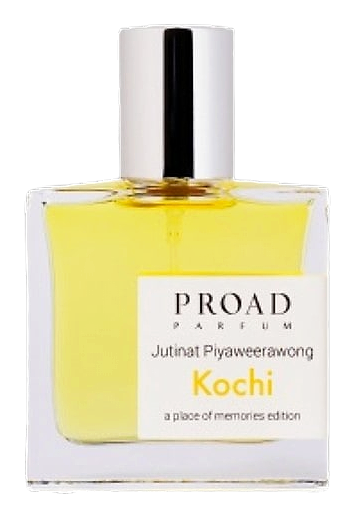
Kochi takes its name from a Japanese prefecture that is originally the biggest yuzu production in Japan. Perfumer Jutinat Pitaweerawong built the composition around that fruit's particular character: bright, citric, vivid in its tartness, recognizably itself rather than a cousin of lemon or grapefruit. Released under Proad's framework, it's less a meditation on transgression than an interpretation of a place. A Japanese local wood house with an open peaceful Zen garden, filtered through one perfumer's reading of what yuzu smells like when it's the protagonist rather than a supporting note. The yuzu here gets the lead, and the wood and florals arrange themselves around it like architecture around a courtyard.
Yuzu and hinoki wood form the spine here, and that's not a casual pairing. Hinoki is the cypress associated with traditional Japanese wooden structures, and its scent is dry, slightly resinous, faintly cool in a way that reads more like a material than a tree. Yuzu sits in that wood like light through a paper screen, filtered and softened but still clearly itself. The middle layer works with grass and iris, which adds that cool, rooty green that prevents the citrus from reading as a shower gel or a cleaning product.
The evolution
The yuzu announces itself almost immediately, sharp and almost bitter, with bergamot and sweet orange amplifying the citrus without softening it. Petitgrain adds the green twig snap that keeps the opening from becoming cologne. The opening is all citrus architecture, bright and confident, and then the handoff happens. Iris arrives early in the heart, powdery and cool, and the florals come in close behind: jasmine barely whispers, mimosa brings a soft yellow warmth, and the grass note keeps the whole thing from getting sweet. Peony and rose settle the florals into something that reads almost like clean skin on a damp morning, an intimate kind of clean rather than a sharp one. The drydown belongs to hinoki. Cedarwood and vetiver ground it, and the aquatic note gives the wood a cool, almost wet quality, as if the wood has been breathing near water.
Cultural impact
Kochi reads as a quiet, place-driven composition in a market often crowded with louder citrus-woods. It wears like a quiet accessory, the kind of fragrance people reach for when they want to feel composed rather than noticed. There's something understated about how the yuzu leads without shouting, and how the hinoki grounds everything without dominating. That restraint has made it appealing to anyone who wants their fragrance to sit close to the skin and stay there, working as a private detail rather than a public statement. It rewards repeat wear, since the wood and floral layers continue to reveal themselves each time you reach for it.