The Story
Why it exists.
The beginning
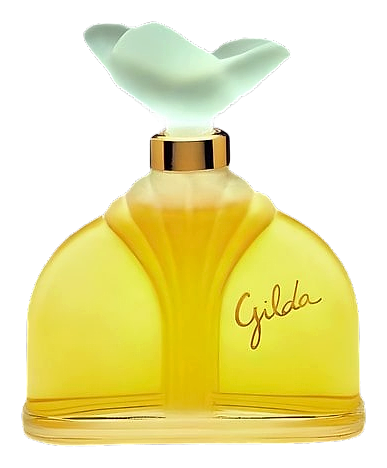
Gilda arrived in 1985 from Francis Camail, a perfumer whose composition places brightness and sensuality in the same frame. The opening brings pineapple, tarragon, African orange flower, and bergamot together, giving the fragrance a fresh, lightly spiced start. Beneath that brightness sits a classic floral heart of tuberose, ylang-ylang, orchid, jasmine, carnation, rose, and lily of the valley. It feels less like a simple floral than a fragrance in conversation with itself: crisp fruit at first, polished petals after that, and a warm, woody base waiting underneath.
The unusual part of Gilda is its balance of registers. Pineapple and bergamot make the opening almost sunlit, while tarragon introduces a cool, aromatic edge. Then the heart turns creamy and powdery, with tuberose and ylang-ylang adding depth rather than simple sweetness. Sandalwood, cedarwood, amber, benzoin, vanilla, and musk give the composition a soft landing. Together, they make Gilda feel both floral and woody, fresh at first and distinctly warm once it settles.
The evolution
The opening has a clean, sparkling snap. Pineapple and bergamot bring a bright fruit-and-citrus lift, while tarragon keeps the brightness from becoming too sweet. African orange flower adds a polished floral glint, almost like light caught on white fabric. As the opening softens, the heart expands into a fuller bouquet. Tuberose and jasmine give it a creamy floral center, rose adds a classic powdery elegance, and ylang-ylang brings a sensual, rounded warmth. Orchid and lily of the valley keep the flowers airy rather than heavy. The base then takes over: sandalwood and cedarwood create a smooth woody foundation, amber and benzoin bring resinous warmth, and vanilla softens the edges. Musk leaves a close, skinlike finish. As the brighter fruit fades, the fragrance settles into a warmer floral impression, with the soft amber, woods, and musk lingering close to the skin.
Cultural impact
Gilda presents an expressive floral style shaped by contrast. Pineapple and bergamot create a bright opening, balanced by tarragon's herbal sharpness and the polished glint of African orange flower. The heart gathers tuberose, jasmine, rose, ylang-ylang, orchid, and lily of the valley into a bouquet that feels both airy and creamy. As the composition settles, sandalwood and cedarwood lend a smooth woody structure, while amber, benzoin, vanilla, and musk create a warm, close finish. Its appeal lies in this movement from clear fruit-and-citrus brightness to a fuller floral base, offering a richly layered experience that invites discovery.
The House
Pierre WulffPierre Wulff is the name attached to a small Parisian fragrance house built around the perfumer who created it. Swedish-born Pierre Wulff trained in Grasse before developing a career in perfumery, and the house is best known for Gilda, released in the mid-1980s. Sources differ slightly on the exact launch year, with some listing 1986 and the supplied brand record citing 1985. The narrow catalogue gives Gilda a clear identity within the house’s history. Wulff’s background points to a perfumery shaped by French training and an international career, while his later role at Robertet connects the name to the wider fragrance industry.
The Creator
Francis CamailHis work spans green florals, crisp citruses, and structured chypres, suggesting a perfumer equally comfortable with American boldness and French refinement. Francis seems to favor compositions that translate abstract creative briefs into wearable luxury, a skill that explains…