
The Story
Why it exists.
The beginning
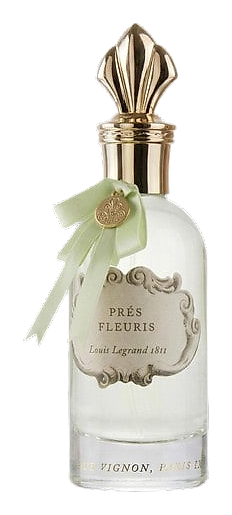
Prés Fleuris entered the Oriza L. Legrand catalogue in 1811, the founding year of the house. The name translates to 'flowering meadows,' and the inspiration was direct: the uncut fields of early summer, where wildflowers and grasses grow in the same untamed breath. The house built its identity on translating botanical reality into French perfumery's vocabulary, and this composition sits within that lineage. A flowering meadow, rendered through galbanum's resinous green, narcissus's almost-loud floral, and the dry warmth of hay left in the sun. It belongs to the Legrand 1811 collection, the archival line that gathers the house's oldest formulas for contemporary noses to encounter. The composition reads like an herbarium leaf pressed between glass: vivid, taxonomic, and unbothered by trends.
What makes the structure unusual is the refusal to soften the edges. Prés Fleuris doesn't cushion its greens with sweetness or fruit. Galbanum and blackcurrant bud open with that raw, almost bitter green that smells like a stem snapped between fingers. Then narcissus, chamomile, and orange blossom bring the floral, but the clover and the honeyed undertones keep it grounded. The base is hay, vetiver, and a quiet musk, and it's the hay that surprises every time. That dried-grass note is the one that makes the whole thing smell like an actual field rather than a perfume that wishes it were one.
The evolution
The first thirty minutes belong almost entirely to the greens. Galbanum cuts sharp, blackcurrant and lemon lift it into something almost fizzy, and the ozonic note gives the whole opening that wide-open-sky quality that makes green fragrances feel like they need room to breathe. This phase announces itself. People around you will notice. The transition into the heart comes quickly, and that's where the flowers arrive: narcissus first, a dense almost-honeyed floral that some people describe as intoxicating and others find slightly animal, followed by chamomile and orange blossom softening the edges. The clover keeps the whole thing tethered to the ground. As the hours pass, the drydown turns into a patient study in hay and vetiver. That hay note is the star of the late game, dry and sun-warmed and faintly sweet from the tonka beneath it.
Cultural impact
Prés Fleuris wears as the scent of someone who has nothing to prove and a garden they actually tend. It treats pastoral subject matter with a seriousness that refuses to soften the edges into commercial friendliness. Wearers who return to it tend to be people who know what they want from fragrance and prefer a composition that behaves like a living thing rather than a product. Within the Legrand 1811 collection, it functions as an anchor, a green floral that defines the character of the archival line and the kind of perfumery the house has always stood for.