The Story
Why it exists.
The beginning
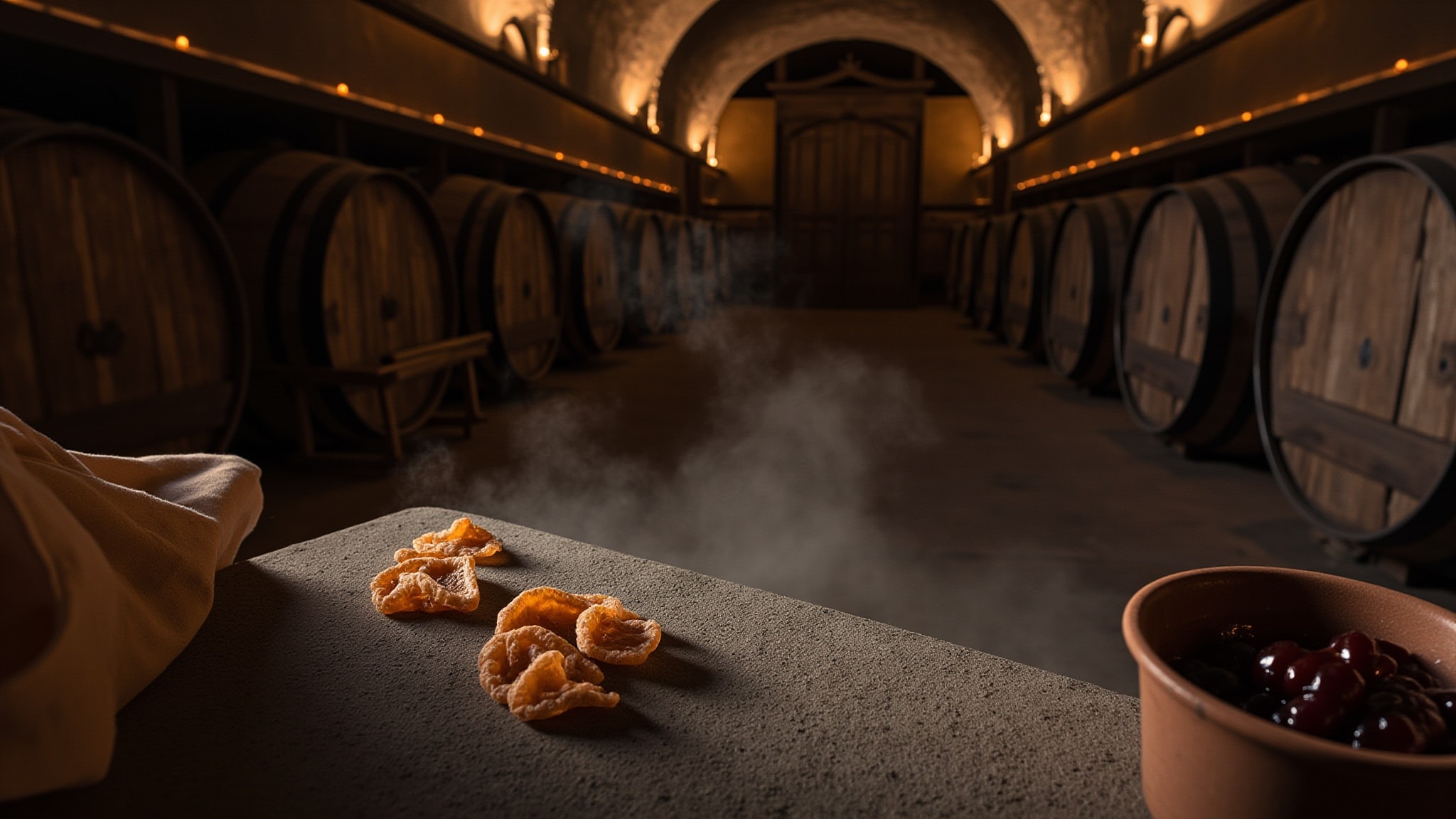
Beatrice Cointreau, great-granddaughter to Pierre Frapin, created 1270 as a direct reference to the house her family built in the Cognac region. The name is the year. The fragrance is the inheritance. Working from the cellar expertise of a cognac house established in the thirteenth century, Beatrice translated the sensory memory of aging spirits into a fragrance that mirrors the complexity of the family's finest reserves. The fragrance does not announce itself. It fills a room the way cool cellar air fills your lungs, dense and present.
Frapin's philosophy centers on restraint over spectacle. The brand does not chase trends. 1270 reflects this entirely. The choice of candied bitter orange peel and prune over brighter citruses signals a commitment to depth over flash. The immortelle in the heart connects to the botanical richness of the Cognac region's terroir. Each note was selected not for novelty but for its role in a larger narrative about heritage, patience, and the weight of history. Pairing the fragrance with warm evenings and quiet interiors allows the composition to breathe without competing for attention.
The evolution
1270 begins with an overdose of dried fruit and bitter citrus peel, a direct nod to the raw materials that find their way into aged spirits. Hazelnut and cocoa evoke the wood aging process. The heart introduces spice, a reminder that not all sweetness is gentle. Immortelle and black pepper add complexity that rewards patience. The drydown of guaiac wood, vanilla, and white honey mirrors the final stage of a spirit's transformation, where rough edges have mellowed into something round, warm, and profoundly nostalgic.
Cultural impact
1270 occupies a specific space, bridging the world of spirits enthusiasts and fragrance collectors. The rancio concept, that wild, complex sweetness of old cognac, represents an unusual reference in perfume that speaks to those familiar with the spirit world. Frapin's background gives 1270 a credibility that fragrances borrowing from liquor culture cannot claim. It reads as authentic to those who know cognac, and intriguing to those who do not.