The Story
Why it exists.
The beginning
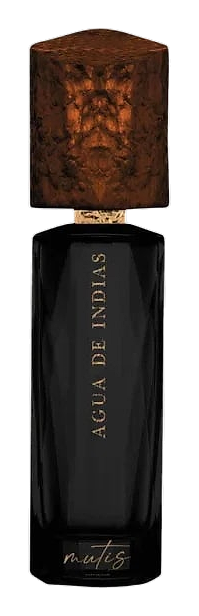
Mutis Nueva Granada, a Colombian artistic perfumery, developed Agua de Indias as a composition rooted in aromatic and resinous traditions. The perfumer, Dominique Moellhausen, built the structure around balsamic materials that carry the weight of age and the patience of slow distillation. There is a quiet density to the opening, a sense of substances that have been coaxed rather than splashed into being. From the first spray, you notice the restraint: nothing announces itself loudly, but everything accumulates. The balsamic core gives the composition a feeling of substance, of liquid that clings to fabric and skin with the same unhurried confidence. It wears like something pulled from a cabinet rather than a counter, and that quality alone sets the tone for everything that follows.
What makes Agua de Indias structurally interesting is its resinous backbone. Benzoin and labdanum anchor the opening, a pairing that recalls incense and aged amber, while galbanum introduces a sharp, almost bitter green note that pulls the whole thing toward the herbaceous. Tolu balsam and myrrh deepen the drydown with warmth that feels older than fashion, the kind of slow-building comfort that only emerges after the first hour of wear. Vanilla appears in both the top and base, stitching the composition together rather than sweetening it.
The evolution
The first fifteen minutes are green and sharp. Tomato leaf and galbanum arrive almost simultaneously, bringing a raw, vegetal quality that feels cut rather than crushed. The leather underneath is suede, not polished, and the spices stay buried, more suggestion than statement. By the thirty-minute mark, the clary sage and iris settle in, adding a dusty, powdery dimension that shifts the composition away from coastal and toward something more interior. The labdanum thickens. Around the two-hour mark, the resinous base takes full command. Myrrh and tolu balsam create a warm, almost candlelit atmosphere, while sandalwood and musk provide a soft foundation. Vanilla weaves through without dominating. On fabric the next morning, the drydown reads as soft amber and worn suede, intimate and persistent.
Cultural impact
Agua de Indias arrived at a moment when Colombian artistic perfumery was finding its own audience, both domestically and abroad. The composition speaks to a specific wearer: someone drawn to resinous, atmospheric fragrances that prioritize material over trend. It rewards patience over projection, asking you to lean in rather than catch a scent from across a room. That positioning makes it a quiet kind of statement, one that trusts the materials to carry the conversation without amplification.