
The Story
Why it exists.
The beginning
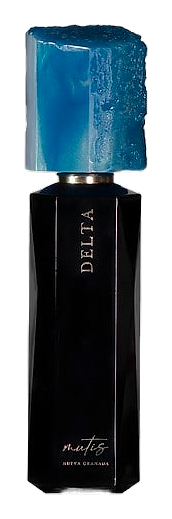
Delta takes its name from the Orinoco river delta, the point where Colombia's great river fans into its many branches before meeting the sea. It was the entry point for colonial forces, yes, but also for seeds, species, and weather systems that collided and mixed. Dominique Moellhausen built the fragrance around that same tension: the place where things arrive and don't quite know yet which direction they'll go. Bergamot and petitgrain open like the first light hitting water, bright, almost astringent, then softening as the morning warms. The composition doesn't try to resolve the contradiction. It holds it.
What makes Delta unusual is the way the violet leaf absolute behaves. In most fragrances it reads as a fleeting green accent, here it functions as a structural element, a sour-green tension that runs through the heart and refuses to fully dissolve into the woody base. Oakmoss amplifies this, adding a mossy, slightly humid quality that evokes the delta's dense vegetation rather than a forest floor. The base doesn't flatten the composition. Instead, vetiver, labdanum, and opoponax layer into something resinous and warm, close to skin, intimate, the kind of scent that stays within arm's reach rather than announcing itself across a room.
The evolution
The opening announces itself within seconds, bergamot and petitgrain arrive crisp and ozonic, with an earthy undertone that reads as wet soil rather than dry dust. The bergamot fades first, around the thirty-minute mark, leaving petitgrain to carry the citrus-adjacent brightness while the heart notes begin their setup. Violet leaf absolute and angelica arrive together, bringing a sour-green complexity that shifts the fragrance from bright to something more vegetable, more alive. This phase lasts two to three hours. Then the cedar and oakmoss take over, deepening the composition into its woody register. The drydown is where Delta earns its name, vetiver, labdanum, opoponax, and amber settle into a warm, resinous base that stays close to the skin for another three to four hours. On some wearers, the earthy notes return in the final phase, creating a loop back to the opening. On others, it ends quietly, leaving faint traces of amber and labdanum on the skin, still faintly detectable the next day.
Cultural impact
Presented at Pitti Fragranze in 2021, Mutis Nueva Granada brought its field-journal approach to an international audience for the first time. Delta arrived as part of a debut cluster, Amaranto, Delta, Agua de Indias, Bahia, Selva Negra, El Dorado, each named after a Colombian landmark or plant. The collection drew attention for its botanical rigor and its commitment to sourcing native species from local growers. Delta specifically found its audience among wearers who appreciate complexity over projection, and who want a fragrance that behaves differently on different days, not a flaw, but a feature.