The Story
Why it exists.
The beginning
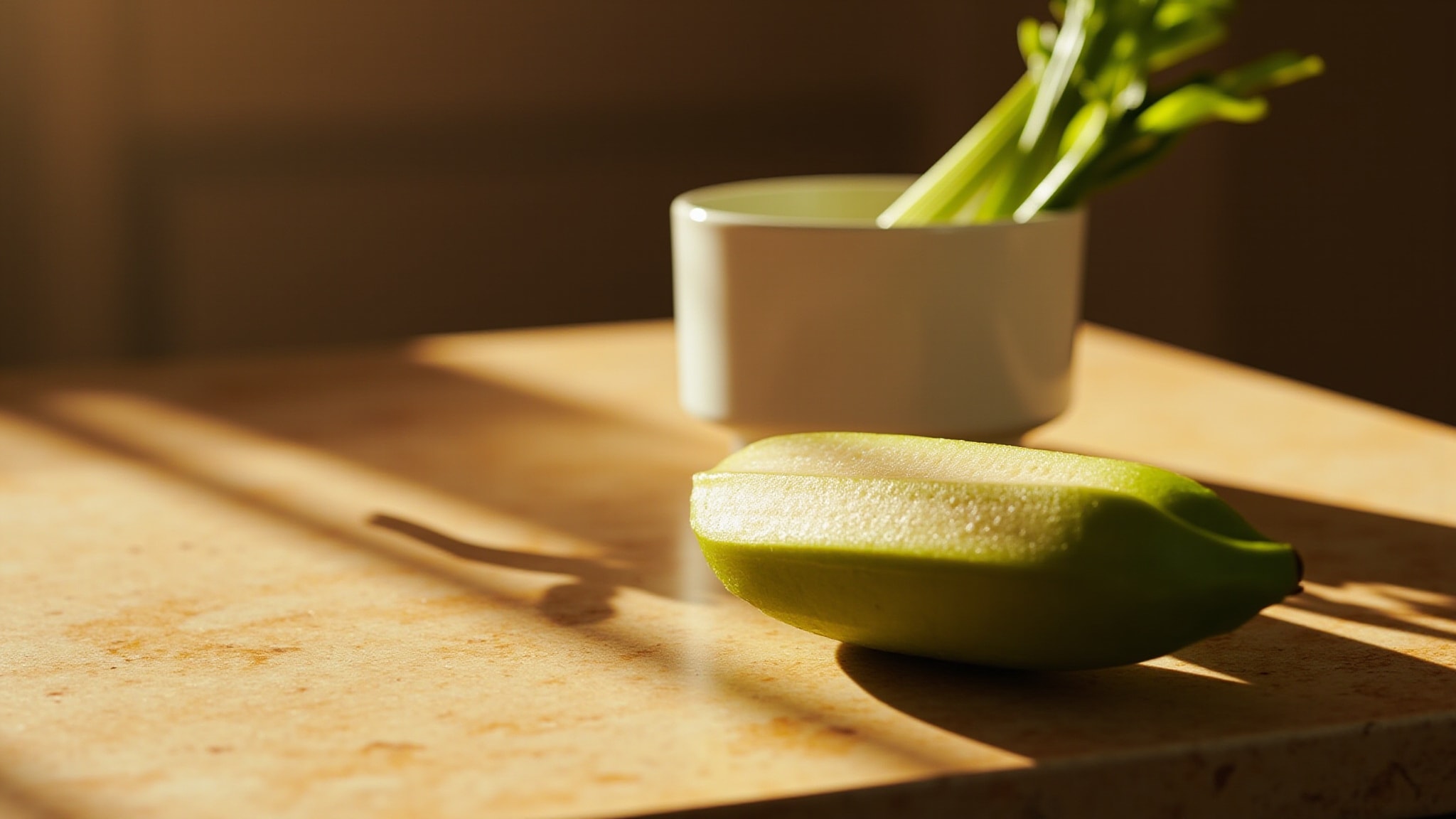
Cristian Cavagna spent fifteen years judging fragrance before he created any. Adjumi, his first entity, launched in 2005. Then a full redesign in 2020. Musa Paradisiaca arrived in 2021 as something new: a composition from a critic who knew exactly what he thought was missing in perfumery. The name comes from the plantain banana, Musa Paradisiaca, and the idea of taking something tropical and familiar and turning it inside out. Tuberose is the flower everyone knows. Banana is the fruit everyone knows. Together, in this context, they're neither sweet nor tropical in any expected way. The green, the animalic, the cream, none of it plays safe.
What makes Musa Paradisiaca unusual is the structure. Tuberose absolute appears in the top, heart, and base, a continuous floral spine that shifts character across the wear. At the opening, it's bright and green alongside banana leaf and celery. By the heart, it layers with ylang-ylang and narcissus into something creamier. The base takes the same tuberose and anchors it with ambergris, civet, sandalwood, vanilla, and cocoa, a warm, slightly animalic drydown that no one would call safe. That's the Cavagna approach: delicate flowers, assertive support. The composition doesn't coddle the wearer. It assumes you can handle something real.
The evolution
First five minutes: green sharpness. The banana leaf and French celery arrive almost vegetable, a clean, biting green that isn't fruit sweetness. Ginger adds clean heat underneath. Then the tuberose begins to assert itself, creamier than the green suggested, pulling the fragrance toward the floral center. Twenty minutes in: the green doesn't disappear. It stays, keeping the tuberose honest, preventing it from going the way of body mist. The ylang-ylang and narcissus join, and the composition becomes warm without being sweet. Two hours: the base arrives. Ambergris and civet shift the energy, animalic warmth without aggression, grounded by sandalwood. Vanilla and tonka bean keep it soft. The cocoa adds depth, a slight bitterness that stops the sweetness from winning. By hour six, you're in the drydown. The tuberose is quieter now, nearly a memory, but the animalics and sandalwood persist. Eight to ten hours on most skin. The next day, there's still something there, warm, animalic, the ghost of cream.
Cultural impact
Musa Paradisiaca arrived in 2021 as a deliberate counterargument to the mainstream tuberose canon. Where most tuberose fragrances lean sweet, safe, and photorealistic, Cavagna and Landi chose green, vegetal, and unapologetically animalic. This reflects a broader shift in niche perfumery toward challenging compositions that ask something of the wearer rather than simply pleasing. The Italian house, founded by a former fragrance critic, brought a critical sensibility to its own creative output, aware of conventions, determined to break them. In doing so, it joined a lineage of tuberose fragrances that refuse easy categorization, from the brutalism of Fracas to the darkness of Datura Noir.