
The Story
Why it exists.
The beginning
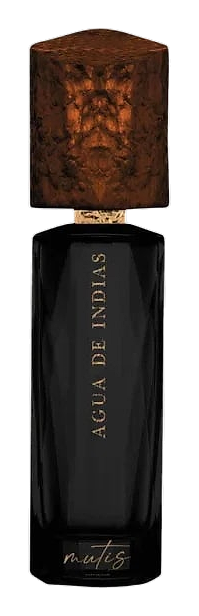
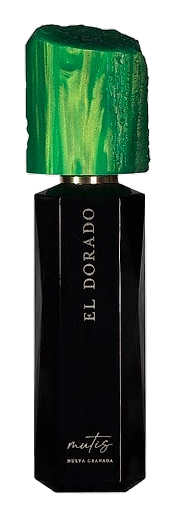
El Dorado. The legendary city of gold that explorers chased for centuries through jungles and across continents. A myth, many believed. A place that turned men greedy and kept its treasures hidden. Mutis Nueva Granada asked a different question: what if the city wasn't a place but a feeling? What if gold wasn't a metal but a quality of light? Dominique Moellhausen built this fragrance around that ambiguity. The composition doesn't smell like treasure, it smells like the afternoon the search was called off. The golden hour when you stop looking and notice everything around you instead. Incense drifts. Pine sap cools the air. The base holds warmth like skin after a long day. That's the real El Dorado: not the find, but the pause before giving up. Moellhausen is Italian by training, Colombian by commission, an unusual pairing that gives this fragrance its particular tension. European precision meets South American botanical ambition.
The pyramid is interesting because it doesn't follow the usual rules. The cannabis note, listed as hemp on most sources, sits in the top alongside citrus and juniper. That's unusual. Most fragrances bury the green, herbal notes deeper or use them as accents. Here, it arrives early and stays present through the heart. Pine and incense take over from there, but the cannabis note doesn't disappear entirely. It integrates. Becomes part of the aromatic character rather than a single moment. Iris is the unexpected move. Powdery, slightly medicinal, with a root-vegetal quality that grounds the smoke from the incense.
The evolution
The opening hits fast. Citrus and pepper arrive together, with the juniper adding a cool, almost medicinal undertone. Bergamot reads brightest for the first twenty minutes, clean, bright, almost sharp enough to sting. The hemp note appears around the ten-minute mark, green and aromatic rather than skunky or heavy. It reads as a plant note, an herbal quality, something you might find in a forest clearing rather than a dispensary. The transition to the heart happens gradually, around the forty-minute mark. Pine overtakes the citrus, and the incense begins to emerge from underneath, not aggressive, but present. The smoke is clean, almost translucent. It doesn't overwhelm the pine; they coexist. The iris adds a powdery, slightly floral counterpoint that prevents the heart from becoming too resinous. At this point, someone unfamiliar with the fragrance might assume they're wearing something entirely different. The drydown is where El Dorado earns its name.
Cultural impact
El Dorado found an audience among wearers who appreciate aromatic-woody fragrances with warmth and depth. The comparison to Byredo's Gypsy Water surfaces repeatedly in community discussion, the two share DNA, but El Dorado is consistently described as deeper, more amber-forward, more opulent. Where Gypsy Water stays airy and minimalist, El Dorado commits to warmth and resinous character. This positioning, the Colombian interpretation of an established niche reference, speaks to how Mutis Nueva Granada approaches the international market. Rather than competing on volume or heritage, the house offers botanical specificity and a point of view rooted in place.