
The Story
Why it exists.
The beginning
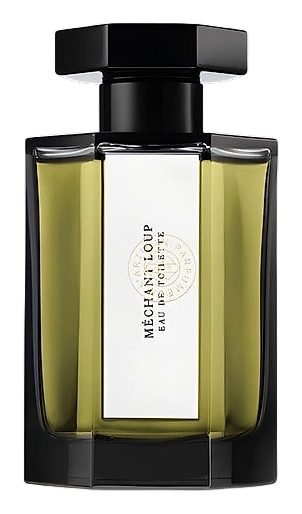
Méchant Loup, or Naughty Wolf, arrived in 1997 from Bertrand Duchaufour, one of L'Artisan Parfumeur's most distinctive noses. The name itself is a provocation: a wolf named not for its teeth, but for its appetites. Founded in Paris in 1976 by chemist Jean Laporte, L'Artisan Parfumeur was among the first true niche houses, championing natural ingredients and unusual compositions rather than blockbuster formulas. Duchaufour's work for the house consistently pushed boundaries, and Méchant Loup stands as one of his most personal statements for the brand.
The note structure reflects Duchaufour's philosophy of using ingredients to tell a story rather than simply combine them. Licorice and black pepper open with intention, creating a confrontational first impression that mirrors the wolf's reputation. The hazelnut and chestnut heart offers a deliberate softening, a moment of warmth within an otherwise provocative composition. The drydown grounds everything in resinous woods and soft sweetness, allowing the fragrance to settle into something intimate and personal. The result is a scent that rewards patience, revealing its layers slowly rather than announcing everything at once.
The evolution
Duchaufour built Méchant Loup as three acts of seduction, each corresponding to a phase of wear. The opening arrests with licorice and black pepper, a combination that announces itself immediately and refuses to ease in gently. The heart softens into hazelnut, chestnut, and hazelnut wood, a passage that feels like warmth found in unexpected places. The drydown settles into guaiac wood, honey, cedarwood, tonka bean, and myrrh, revealing itself slowly over hours as a quiet, resinous presence that lingers close to the skin. Each phase builds on the last, creating a narrative arc that moves from provocation to comfort to lingering depth.
Cultural impact
Méchant Loup built a quiet following for its unusual hazelnut-honey-myrrh axis, an edible sweetness grounded in resin rather than floral sweetness. The balance caught a particular kind of wearer: someone who wanted warmth but found most honey fragrances too linear. It sits in a small niche of its own making.
The House
L'Artisan ParfumeurL'Artisan Parfumeur arrived in 1976 with a quietly radical idea: perfume should feel personal, not mass-produced. Founded by chemist Jean Laporte in Paris, the house became one of the first true niche fragrance houses, championing natural ingredients and artisanal craft at a time when blockbuster launches dominated the market. Its Mûre et Musc, launched in 1978, paired blackberry and musk in a way no one had attempted before, and it became a sensation. Over nearly five decades, the house has continued to create unusual fragrances with distinguished noses, never following trends but trusting instead in beautiful materials and imaginative composition.
The Creator
Bertrand DuchaufourDuchaufour is the master of smoke and shadow, of incense rendered with painterly depth rather than theatrical force. Where many perfumers treat frankincense as a single note, he builds incense as a tonal range, capable of austerity or warmth depending on what the fragrance dem…