
The Story
Why it exists.
The beginning
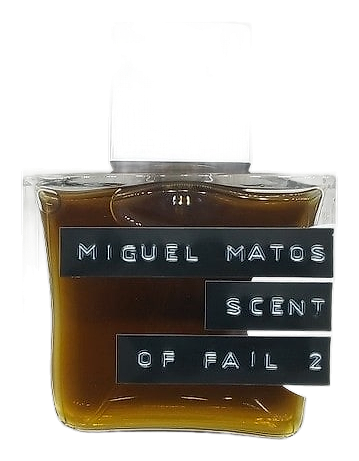
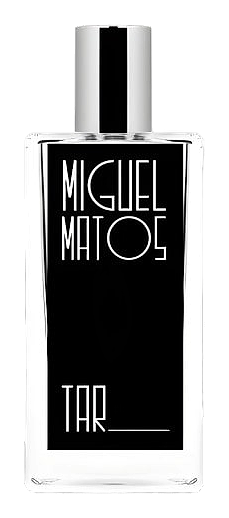
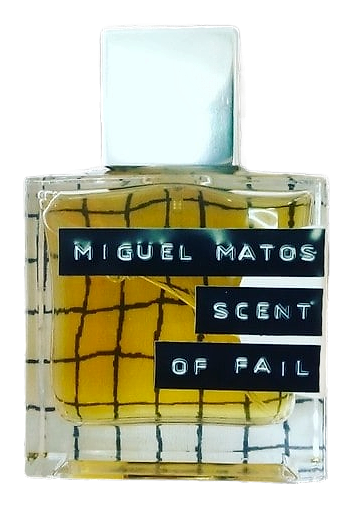
Twenty bottles. That's how many exist of Scent of Fail. The whole thing started the way most perfumers would consider a disaster: Miguel Matos had a bottle on his desk where he dumped every failed experiment, every formulation that didn't pan out into something he wanted to release. Standard practice. You toss the dregs and move on. But this particular bottle kept catching his attention. The accidental blend of thrown-away attempts carried his signature better than half his intentional work. Rather than discard the discovery, Matos bottled the failure as a finished piece, a neo-punk-dada exercise in letting the subconscious write the formula. Launched in 2019 under his own label, the fragrance was sold exactly as it came out of the mistake jar, unreconstructable, un-repeatable.
What makes Scent of Fail unusual isn't just the origin story, it's the structural honesty of the final composition. The notes listed include citrus, narcissus, jasmine, and oakmoss, but Matos himself admits the actual formula is unknown to him, the result of so many overlapping experiments that reconstruction would be impossible. This isn't a composed chypre in the traditional sense. It's an aggregate, a cross-section of the perfumer's vocabulary at a given moment. Green animalic florals, abundant in the raw materials he reaches for most.
The evolution
The opening arrives sharp and immediate. Green notes and citrus hit first, bright and slightly bitter, the way crushed stems smell before the flower opens. Within ten minutes the citrus begins to recede and the narcissus takes hold, thick and almost heady, carrying an indolic warmth that suggests skin rather than air. The jasmine underneath adds a creamy texture to what could otherwise feel austere. This is where the chypre architecture becomes clear: the green-floral tension that classic French perfumery built entire houses on, but rendered here in raw, unpolished form. The narcissus lingers at the center, dense and a little raw, while the jasmine softens its edges without ever smoothing them out. As the composition moves into its middle phase, the animalic notes begin to surface, and they don't arrive politely.
Cultural impact
Scent of Fail was released in a run of twenty, unrepeatable, and the bottle count itself shapes how it gets read. Wearing a fragrance that no longer exists in any retail channel changes the relationship between the wearer and the scent; it becomes a record of a specific process rather than a repeatable purchase. The unreplicable nature of the release gives it the quality of an artifact, something that documents a moment in a perfumer's ongoing experiment rather than a product meant for ongoing distribution. That sense of rarity and process-driven identity is central to how the fragrance presents itself to anyone who encounters it.