
The Story
Why it exists.
The beginning
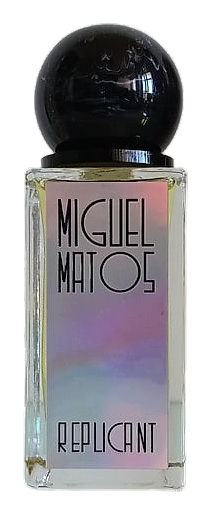
Replicant takes its name from the synthetic beings of Blade Runner, creatures built to be indistinguishable from humans, yet always carrying the faint signature of their artificial origin. The metaphor is precise: here is a chypre that wears the structure of classic perfumery but carries something uncanny in its chemistry. The aldehydes do not imitate natural beauty. They replace it with something stranger and more honest about what it is. The effect is simultaneously familiar and disorienting, like recognizing a face you know but cannot place. There is no attempt to hide the constructed nature of the scent. Instead, the composition wears its architecture openly, letting the synthetic aldehydes announce themselves without apology, creating a tension that defines the entire experience.
What makes Replicant structurally unusual is its refusal to hide its synthetic nature. Where most fragrances chase the dream of smelling natural, this composition places aldehydes front and center, that cold, almost metallic brightness typically used as a supporting player becomes the opening act. Carnation then enters with its warm, slightly medicinal spice, creating a tension between the clinical and the organic that carries through the entire wear. The honey and leather in the base do not soften this tension. They deepen it.
The evolution
The aldehydes arrive first, sharp, crystalline, arresting. Not aggressive, exactly. More like the moment you notice a sound you've been hearing without hearing. Black pepper adds a faint warmth underneath. Then, around thirty minutes in, the temperature shifts. Carnation and lavender emerge, replacing the cold with something more textured, more worn. The heart is where Replicant becomes human. By the third hour, patchouli and frankincense have settled into something resinous and grounded. Leather arrives last, with honey still holding on at the edges. The drydown on skin the next day is faint musk and something that lingers like a memory of a memory. Throughout the evolution, the fragrance maintains its peculiar balance, never fully surrendering to conventional beauty but rather redefining it.
Cultural impact
Replicant has divided wearers in the way only the most confident fragrances can. The aldehydic-carnation opening is described as both repulsive and magnetic, the kind of quality that requires you to sit with it before deciding how you feel. One reviewer called it the most unusual take on the chypre genre they had tested. Another noted that it is over-the-top, in the best way possible, and that this is always how Matos works. The synthetic chypre classification is not incidental, it is the concept. Wearers who appreciate the strange and the confrontational find in Replicant something that rewards patience and attention.