The Story
Why it exists.
The beginning
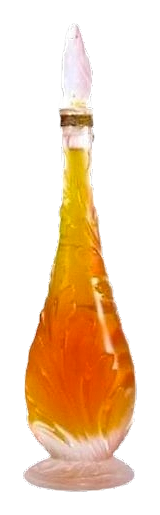
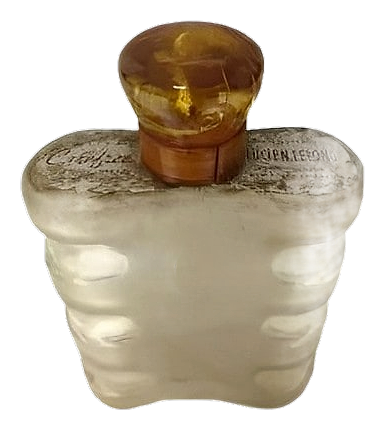
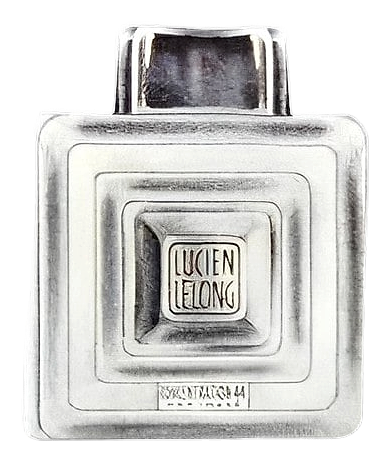
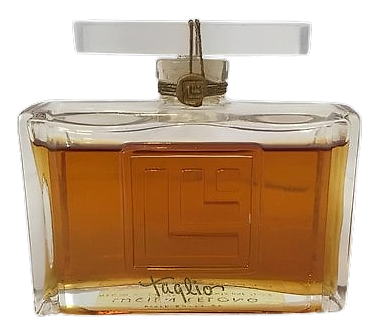
Taglio arrived in 1945 from Lucien Lelong, a house with deep roots in both couture and perfumery. The name itself means "cut" in Italian, a single sharp word for a composition built around three florals and a bright aldehyde lift. It was created in 1945, a year that marked the end of the Second World War. Lelong's perfumery output had already built a quiet reputation, and Taglio belongs to that lineage: confident naming, no marketing cushion, a scent meant to speak for itself. It is floral at its core, structured by aldehydes, and finished with the kind of restraint that made Lelong's compositions feel architectural rather than decorative.
The structure of Taglio is striking for its restraint. Three florals, rose, orris, and carnation, carry the entire heart, and the composition lets each one hold a distinct character. Rose provides the romantic center, full and rounded, with that soft, petal-like warmth that anchors the whole. Orris adds a cool, rooty powder, the kind of dry, slightly metallic iris note that brings depth and a quiet seriousness. Carnation brings a clove-tinged warmth, a dry spicy edge that keeps the whole thing from drifting into soap or sweetness.
The evolution
The opening of Taglio belongs to the aldehydes: bright, effervescent, almost carbonated, the way vintage aldehydes behave when they've been well-dosed. There's a soapy-clean edge that reads more like fresh laundry than cologne, and it gives the whole opening a lifted, elevated quality, a brightness that feels almost electric on skin. As the first minutes pass, the aldehydes don't vanish so much as move to the back, making room for the florals to step forward. Rose comes first, full and rounded, with that classic romantic warmth, then iris (orris) folds in with its cool, powdery root character, bringing a dry, almost metallic edge that shifts the whole composition. By the time the florals have settled, the carnation makes itself known, bringing a dry, slightly clove-like warmth that grounds everything and keeps the sweetness in check.
Cultural impact
Released in 1945 under Lucien Lelong, Taglio arrived at a moment of transition for French perfumery, the same year that marked the end of the Second World War. The house had already built a recognizable signature through its catalog of compositions, and Taglio sits inside that lineage, leaning on just three florals, rose, orris, and carnation, lifted by aldehydes rather than padded with supporting base materials. This kind of economy felt distinctive for its time, a tight construction where every element earns its place and nothing is included for show.