The Story
Why it exists.
The beginning
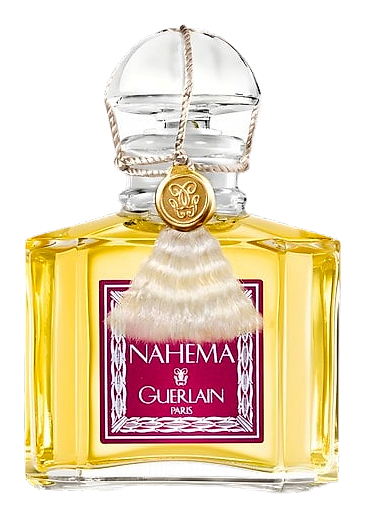
Jean-Paul Guerlain composed Nahéma in 1979, and the composition reflects the kind of risk a house takes when it decides to place a single flower at the center of everything. Nahéma is a rose fragrance through and through, built around Turkish rose in the heart, supported by a careful architecture of supporting notes that never quite upstage the star. The opening carries the bright, slightly sharp lift of aldehydes, the kind of effervescent sparkle that gives a floral its first breath of air. Beneath that initial brightness, the rose settles in with the full density the flower can offer, cushioned by hyacinth and passion flower, two green-floral presences that keep the composition from collapsing into pure sweetness. The base is where Nahéma becomes unmistakably Guerlain.
What makes Nahéma unusual is how little else competes with the rose. Many florals hedge with citrus brightness or green sharpness up top. Nahéma opens with rose already, uncut, and layers a quiet hyacinth and passion flower beneath it for depth rather than distraction. The rose heart, listed as Turkish rose in official documentation, carries the full-bodied density the flower is known for, neither airy nor restrained. The base, vanilla, sandalwood, patchouli, tonka, is where the composition's warmth lives.
The evolution
The opening is almost confrontational: rose, aldehydic, sweet enough to stop someone mid-sentence. The aldehydes give the first impression its vintage, sparkling clarity, the kind of effervescent lift that makes the rose feel less like a garden flower and more like a composed statement. As the aldehydes settle, the hyacinth makes itself known, green and watery, tempering the sweetness without dulling it. The passion flower and rose settle into a dense, almost narcotic floral, plush and enveloping, the kind of accord that fills a room rather than hovering at the wrist. The base arrives gradually, and this is where the deeper, warmer character emerges. Vanilla and tonka warm the composition from underneath, patchouli adds a low earthy hum, sandalwood rounds the edges. The later stages become increasingly creamy, the rose softening into something more velvety and less fresh.
Cultural impact
Nahéma holds a specific place in the Guerlain catalog. It's the house's definitive rose, a counterpart to the more famous orientals the house built its reputation on. The extrait concentration represents the original, most concentrated form of the composition, and it remains the version most associated with the Guerlain name. The fragrance was composed in 1979 by Jean-Paul Guerlain, placing it within a specific era of the house's output, a period when bold, single-flower compositions were still being approached with the kind of seriousness usually reserved for more complex accords.
The House
GuerlainGuerlain stands as one of the oldest and most revered perfume houses in the world, founded in Paris in 1828 by Pierre-François-Pascal Guerlain. What began as a boutique on rue de Rivoli quickly became the preferred destination for Parisian society, attracting dandies and elegant women who sought custom-crafted fragrances. The house's influence grew to such heights that Guerlain earned the title of Official Perfumer to Napoleon III after presenting Eau de Cologne Impériale to Empress Eugénie as a wedding gift in 1853. This royal patronage marked the beginning of Guerlain's enduring association with European aristocracy, as the house went on to create fragrances for Queen Victoria and Queen Isabella II of Spain. Today, under the creative direction of Thierry Wasser, the fifth-generation perfumer, Guerlain continues to shape the landscape of fine fragrance with a portfolio spanning over 1,100 olfactory creations. The house remains headquartered at its legendary Champs-Élysées mansion, a historic monument that anchors Guerlain's position at the intersection of heritage and contemporary luxury.
The Creator
Jean-Paul GuerlainJean-Paul Guerlain's style resists easy categorization, though richness and depth define nearly every composition. He favored opulent oriental structures, warm woods and resins, and florals treated with almost sculptural precision.