The Story
Why it exists.
The beginning
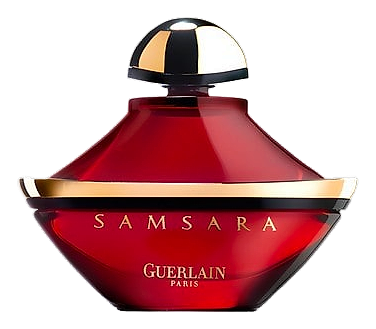
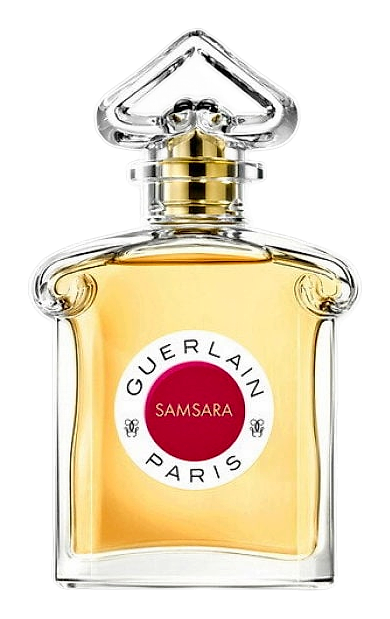
Samsara arrived in 1989 from Jean-Paul Guerlain, and the name does the heavy lifting before you even touch the bottle. Samsara is a Sanskrit word rooted in Hindu philosophy, describing the cycle of rebirth, the eternal return. The fragrance carries that weight: a composition built around jasmine and sandalwood, two materials rebuilt into something distinctly Guerlain. Guerlain's brand description framed it as a legend of sacred love, and the composition honors that intention. Not a flirtation. A reckoning. The original formula leaned on roughly 20% natural Mysore sandalwood oil, which at the time was an accessible raw material rather than a precious one. That decision shaped everything that followed, because sandalwood at that concentration doesn't whisper. It anchors the entire structure.
Here's what makes the construction unusual: the jasmine isn't a top-note flourish. It runs from the first spray through the heart and into the drydown, held aloft by sandalwood for the full duration. Most florals peak and disappear. This one accumulates. The ylang-ylang, peach, and citrus opening exist to soften the entrance, not to compete with what comes after. By the time orris, narcissus, and rose unfold in the middle, the jasmine is already deep in conversation with sandalwood below. The base adds tonka, vanilla, amber, and iris, all of them soft, all of them powdery, none of them loud enough to derail the central pact between flower and wood.
The evolution
The first twenty minutes are deceptive. Bergamot and lemon flash bright, peach adds a fruity sweetness, and the ylang-ylang underneath reads almost exotic, almost tropical. It feels like the fragrance is heading somewhere green and easy. Then the jasmine takes over, and the trajectory bends hard. Within the first hour, the heart is dense and narcotic, carnation and rose, orris giving it a powdery skin, narcissus adding a green-animal edge that keeps it from going soft. The sandalwood has been present since minute one, but here it starts to rise. By hour three, the florals have thinned to a haze and the base has fully arrived. Sandalwood, tonka, vanilla, amber, a whisper of iris. It's creamy, almost lactonic, and it doesn't move much from here.
Cultural impact
Samsara earned its place through patience rather than promotion. The composition doesn't announce itself as groundbreaking so much as settle into the category and quietly redefine what's expected there. It doesn't compete in a room so much as reshape the air already there. The warmth and powder of the composition give it a texture that reads as velvet rather than geometry, a softness that distinguishes it from the sharper florals and brighter orientals that surrounded its 1989 debut.