
The Story
Why it exists.
The beginning
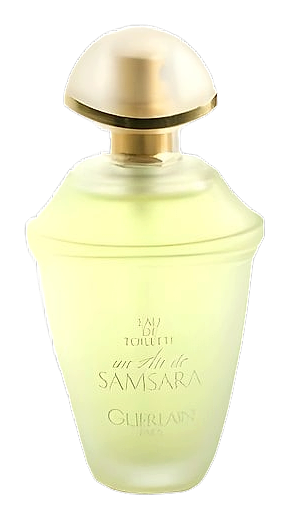
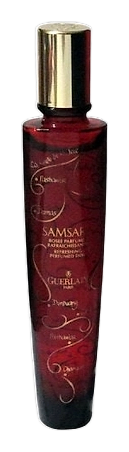
Jean-Paul Guerlain approached the Samsara line with a clear intention to reinterpret the iconic fragrance for a new era of wearer. Rather than simply diluting the original, he set out to capture its essence through a lighter, more luminous lens. Drawing on the house of Guerlain's legacy of Parisian expertise, he restructured the composition from the ground up, placing fresh citrus materials and green notes at the opening to create an immediate sense of clarity and vitality. The heart was built around a soft floral matrix, while the base was chosen to provide warmth and intimacy rather than volume, resulting in a fragrance that honors its lineage without duplicating it.
The note selection for this fragrance reflects a deliberate philosophy: citrus and green notes provide the opening with energy and precision, while the floral heart offers emotional resonance through rose, jasmine, and a touch of carnation spice. The base materials, particularly sandalwood and amber, serve to ground the fragrance and give it staying power without aggressive projection. This balance creates a scent that reads as natural and effortless, suitable for daily wear while maintaining the sophistication expected from the Guerlain house.
The evolution
The fragrance opens with a crisp, luminous wave of bergamot and lime that feels like morning light, softened slightly by the gentle presence of peach. As the top notes recede, the heart emerges with a refined floral character, led by rose and violet and enriched by the powdery depth of orris root and the sweet, creamy qualities of jasmine. The drydown then anchors the composition with sandalwood and amber, introducing a warm, enveloping quality that gradually reveals iris, musk, tonka bean, and vanilla, producing a finish that is both intimate and enduring.
Cultural impact
Samsara Rosée Parfumée Rafraichissante reflects a modern reinterpretation of Guerlain's heritage, marrying classic oriental warmth with contemporary citrus‑green freshness. Its launch in 2025 arrived at a time when consumers sought lighter, nature‑inspired scents that still carried depth. By blending bergamot and lime with traditional notes like sandalwood and amber, the fragrance bridges generational tastes, appealing to both longtime Guerlain enthusiasts and younger audiences exploring luxury perfumery. The perfume’s subtle yet confident presence has influenced recent market trends, encouraging other houses to experiment with bright top notes atop established woody‑amber bases, thereby shaping the evolving narrative of French fragrance innovation.
The House
GuerlainGuerlain stands as one of the oldest and most revered perfume houses in the world, founded in Paris in 1828 by Pierre-François-Pascal Guerlain. What began as a boutique on rue de Rivoli quickly became the preferred destination for Parisian society, attracting dandies and elegant women who sought custom-crafted fragrances. The house's influence grew to such heights that Guerlain earned the title of Official Perfumer to Napoleon III after presenting Eau de Cologne Impériale to Empress Eugénie as a wedding gift in 1853. This royal patronage marked the beginning of Guerlain's enduring association with European aristocracy, as the house went on to create fragrances for Queen Victoria and Queen Isabella II of Spain. Today, under the creative direction of Thierry Wasser, the fifth-generation perfumer, Guerlain continues to shape the landscape of fine fragrance with a portfolio spanning over 1,100 olfactory creations. The house remains headquartered at its legendary Champs-Élysées mansion, a historic monument that anchors Guerlain's position at the intersection of heritage and contemporary luxury.
The Creator
Jean-Paul Guerlain & Gérard AnthonyJean-Paul Guerlain's style resists easy categorization, though richness and depth define nearly every composition. He favored opulent oriental structures, warm woods and resins, and florals treated with almost sculptural precision.