
The Story
Why it exists.
The beginning
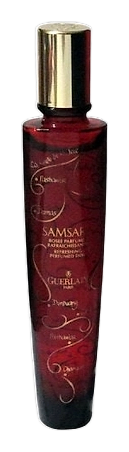
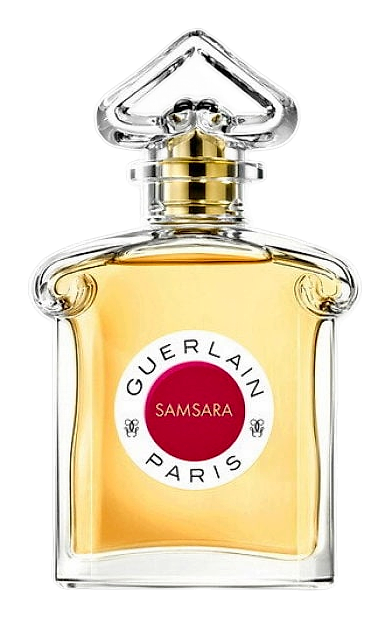
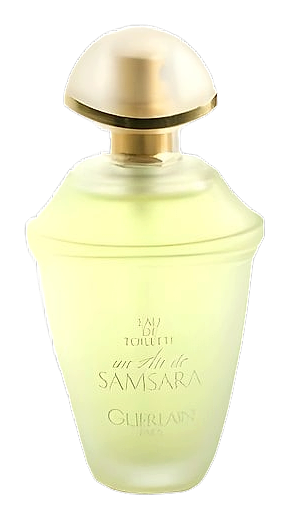
The original Samsara arrived in 1979, Guerlain's meditation on harmony, built around ylang-ylang and Mysore sandalwood. Jean-Paul Guerlain returned to that same sandalwood core in 1995, but gave this flanker a completely different face. Un Air de Samsara translates to 'a breath of Samsara', lighter, airier, a reinterpretation rather than a repetition. The mint and citrus opening borrowed from a different olfactory world entirely: fresh, green, almost medicinal. Same sandalwood ending. Different story to tell.
What makes this composition unusual is the contrast between the opening and the base. Mint as a top note is uncommon in women's fragrance, it skews toward masculine or therapeutic. Here it serves as a cooling agent, a way to make the jasmine and narcissus heart feel luminous rather than heavy. The Mysore sandalwood in the base doesn't compete with the mint's brightness; instead it waits, patient, for the green to clear. The herbaceous notes add an almost garden-fresh quality that keeps the whole thing grounded rather than synthetic. It's a composition built on patience, what arrives last is what you'll remember.
The evolution
The opening hits fast and sharp. Mint dominates for the first five to ten minutes, bright, almost clinical. Bergamot and lemon arrive to soften it slightly, but the green notes keep everything crisp. Then the hand-off: the mint recedes and the heart opens. Narcissus and jasmine take over, turning the fragrance from sharp to luminous. The transition isn't gradual, it's a clear shift in character. For the next few hours, the florals carry the composition, warm and yellow and surprisingly soft. The sandalwood announces itself in the final act, creamy and close, with herbaceous undertones that keep it from feeling overly sweet. By the end of a full day, it's a quiet warmth that lingers near the skin.
Cultural impact
Discontinued in the early 2000s, Un Air de Samsara has since become a collector's item, harder to find, more coveted for it. The mint opening remains divisive: some find it refreshing, others detect a medicinal quality. But those who wait past the opening find a jasmine-sandalwood warmth that justifies the search. The fragrance has a small but devoted following among Guerlain enthusiasts who appreciate its departure from the original's heavier structure.
The House
GuerlainGuerlain stands as one of the oldest and most revered perfume houses in the world, founded in Paris in 1828 by Pierre-François-Pascal Guerlain. What began as a boutique on rue de Rivoli quickly became the preferred destination for Parisian society, attracting dandies and elegant women who sought custom-crafted fragrances. The house's influence grew to such heights that Guerlain earned the title of Official Perfumer to Napoleon III after presenting Eau de Cologne Impériale to Empress Eugénie as a wedding gift in 1853. This royal patronage marked the beginning of Guerlain's enduring association with European aristocracy, as the house went on to create fragrances for Queen Victoria and Queen Isabella II of Spain. Today, under the creative direction of Thierry Wasser, the fifth-generation perfumer, Guerlain continues to shape the landscape of fine fragrance with a portfolio spanning over 1,100 olfactory creations. The house remains headquartered at its legendary Champs-Élysées mansion, a historic monument that anchors Guerlain's position at the intersection of heritage and contemporary luxury.
The Creator
Jean-Paul GuerlainJean-Paul Guerlain's style resists easy categorization, though richness and depth define nearly every composition. He favored opulent oriental structures, warm woods and resins, and florals treated with almost sculptural precision.