
The Story
Why it exists.
The beginning
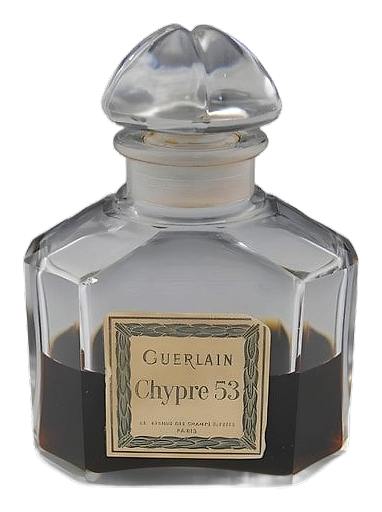
This chypre belongs to a lineage of structured, deliberate fragrances built to age with the wearer rather than flatter the moment. The name itself carries weight, and sources vary on what the number signifies, with some reading it as a date and others treating it as an internal designation. Either reading points to a working draft that became a finished argument. The composition shows its intent from the first breath. Bergamot at the gate, rose and iris in the salon, patchouli and animalic notes holding the foundation. A chypre built with load-bearing walls and nowhere to hide. Guerlain was a house known for compositions with backbone, and this one sits squarely in that tradition. The structure rewards patience.
What separates this from the thousands of chypres that followed is the insistence on animalic notes without apology. This composition adds ambergris, tolu balsam, and a current of animalic warmth that makes the moss feel inhabited. The heart stacks rose with iris and ylang-ylang, which gives the composition a powdery, almost suede-like texture before the base reasserts itself. The combination of florals and darker base materials creates a tension that holds throughout the wear. Rather than smoothing the genre's sharper edges, this one leans into them with confidence.
The evolution
The bergamot opens bright but brief, a citrus introduction that yields quickly to the iris waiting beneath. Rose follows close behind, dusty and cool, then ylang-ylang rounds the heart into something almost tropical before the patchouli steps in. By the second hour the composition has shifted entirely. The florals recede, and the base takes over with a dense, leathery warmth. The animalic notes sharpen as the hours pass. They don't fade so much as concentrate, lending the drydown a skin-like intimacy that lasts well into the evening. On skin the trail softens to a close hum, warm and persistent. What began as a polite citrus chypre ends as something far less restrained. The transformation is the point.
Cultural impact
Chypre 53 sits in a rare category: a discontinued Guerlain composition that collectors and vintage hunters still circle. Its animalic base and full-throated chypre structure give it a character distinctly its own, separate from the lighter or more decorative fragrances that dominate current releases. The combination of oakmoss, patchouli, rose, and iris grounds it firmly in a classic tradition, while the inclusion of ambergris and tolu balsam pushes it toward something more rugged and uncompromising.
The House
GuerlainGuerlain stands as one of the oldest and most revered perfume houses in the world, founded in Paris in 1828 by Pierre-François-Pascal Guerlain. What began as a boutique on rue de Rivoli quickly became the preferred destination for Parisian society, attracting dandies and elegant women who sought custom-crafted fragrances. The house's influence grew to such heights that Guerlain earned the title of Official Perfumer to Napoleon III after presenting Eau de Cologne Impériale to Empress Eugénie as a wedding gift in 1853. This royal patronage marked the beginning of Guerlain's enduring association with European aristocracy, as the house went on to create fragrances for Queen Victoria and Queen Isabella II of Spain. Today, under the creative direction of Thierry Wasser, the fifth-generation perfumer, Guerlain continues to shape the landscape of fine fragrance with a portfolio spanning over 1,100 olfactory creations. The house remains headquartered at its legendary Champs-Élysées mansion, a historic monument that anchors Guerlain's position at the intersection of heritage and contemporary luxury.
The Creator
Jacques GuerlainJacques was among the first perfumers to work seriously with synthetic ingredients alongside naturals, publishing on essential oils with chemist Justin Dupont and experimenting with perfuming ink. His technical approach was precise: volume measurements for liquids, careful wei…