The Story
Why it exists.
The beginning
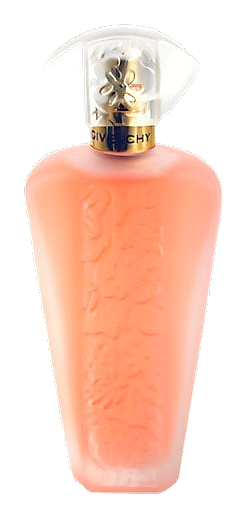
Fleur d'Interdit arrived in 1994, extending the lineage of the original L'Interdit that Hubert de Givenchy created for Audrey Hepburn as something private, something worn close. The name means 'forbidden flower.' Perfumer Daniel Molière built it for a younger generation, with florals that bloom without apology, a garden that feels lush and vivid, one that captures the spirit of something cherished and kept close. The composition balances bright fruit with deep floral richness, creating a fragrance that feels both modern and rooted in the house's heritage.
What Molière understood was that 'aquatic' didn't have to mean 'nothing.' The melon and watermelon at the top aren't watery defaults, they're fruit that brings juicy sweetness to the opening. The green notes and hyacinth add complexity that keeps the sweetness from settling. Then the heart hits: eight florals, no hesitation. Gardenia, jasmine, lily of the valley, rose, cyclamen, lilac, orchid, violet leaf. That's not a bouquet, that's a garden gate left open.
The evolution
The opening arrives fast, melon and watermelon hitting bright and juicy, watermelon giving it a distinct fruity sweetness that separates it from simpler aquatic fragrances. Bergamot and green notes keep it crisp for the first twenty minutes while hyacinth adds a floral undertone that keeps the fruit from feeling flat. Then the heart takes over gradually, lilac and cyclamen arriving before the bigger white florals fully bloom. Gardenia and jasmine arrive around the thirty-minute mark, pushing the sweetness higher, but the green notes persist underneath, keeping it from becoming pure dessert. The drydown is where it gets interesting: oakmoss and cedar emerge slowly, adding a mossy, woody grounding that feels rooted, the kind of base that makes you understand why people used to say a perfume had 'depth.' Iris and vanilla settle into a powdery softness that stays close to the skin for hours.
Cultural impact
Fleur d'Interdit arrived in 1994 as Givenchy's answer to the rising tide of fruity-aquatic women's fragrances flooding the market. Where competitors chased the aquatic trend blindly, Givenchy's brief was more romantic: a garden protected from the outside world, eternally in bloom. The melon-watermelon opening placed it squarely in the fruity-floral conversation, but the eight-note white floral heart and oakmoss-iris base gave it a chypre depth that many contemporaries lacked. It became a cult favorite among collectors who missed the more austere elegance of the original L'Interdit in favor of something softer, greener, more approachable.