
The Story
Why it exists.
The beginning
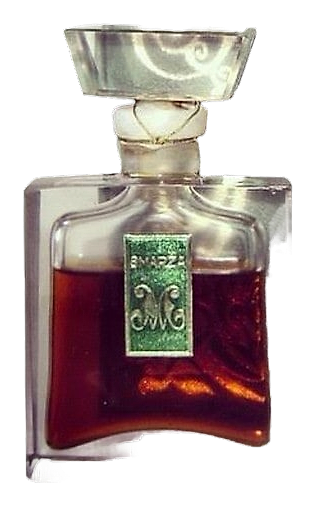
Madrigals arrived in 1972, a Riga composition from the Dzintars house. The name borrows from the vocal genre rooted in Renaissance poetry and courtly romance, a musical form built on multiple voices weaving around each other. That idea sits at the heart of the composition. Perfumers Bronislava Schwarzman and Liesma Oše built a fragrance where no single note dominates the conversation, where cool florals and green herbs trade lines like singers in a small chamber. The result reads as an aromatic floral in the classical mode, carrying a distinctly Baltic character. On skin, the interplay between lily of the valley and rose at the opening gives way to the quieter register of lavender and coriander, which lend an aromatic coolness without tipping into fougère territory.
What makes the structure interesting is the conversation between the white florals on top and the oakmoss-galbanum partnership underneath. Lily of the valley and rose get all the attention at first glance, but the real architecture sits lower: patchouli and vetiver pulling warmth into what could have been a thin, soapy heart, then oakmoss and galbanum providing the green contrast that gives the composition its backbone.
The evolution
The opening moves quickly. Bergamot brightens the edges before lily of the valley, rose, and jasmine settle into their familiar soapy-cool register, a tight, almost green floral that smells like clean linen and cold water rather than anything tropical or indolic. The jasmine stays muted, more about texture than narcotic sweetness. Before long the lavender and coriander arrive, and the character shifts noticeably greener and more aromatic. The patchouli and vetiver underneath pull the composition toward something earthier, pulling the florals down into a more grounded space. This is the phase that distinguishes Madrigals from a simple white floral: the point where the airy top notes meet the dense, mossy base and the whole thing finds its balance. The drydown is where it settles into its most interesting self.
Cultural impact
Madrigals sits within Dzintars' Soviet-era catalogue, a composition that circulated across the Union under its Russian-language name Мадригал. The fragrance embodies a particular sensibility: classical structure, restrained sillage, and a green-mossy base that rewards slow wearing. On the skin, it reveals itself in stages: an opening of bergamot and white florals that reads clean and cool, a heart where lavender and coriander introduce a herbal clarity, and a base of oakmoss, galbanum, patchouli, and vetiver that grounds the composition in something earthy and faintly bitter.
The House
DzintarsDzintars is a Latvian perfume house that has been creating fragrances for nearly a century. Founded in Riga in the early 1920s, the brand survived the upheavals of World War II, Soviet nationalisation and the re‑establishment of Latvia’s independence. Its catalogue includes more than two hundred scents, ranging from classic fougère blends to aromatic compositions that echo the Baltic landscape. Dzintars remains a familiar name in Eastern Europe, where many of its vintage releases are still recognised by collectors.
The Creator
Bronislava Schwarzman & Liesma OšeHer signature technique involves layering aldehydic brightness over structured florals, creating an effect that feels both vintage and surprisingly modern. Schwarzman favored ingredients with clear, assertive characters: pine needles, lilac, violet, and lily-of-the-valley appe…