The Story
Why it exists.
The beginning
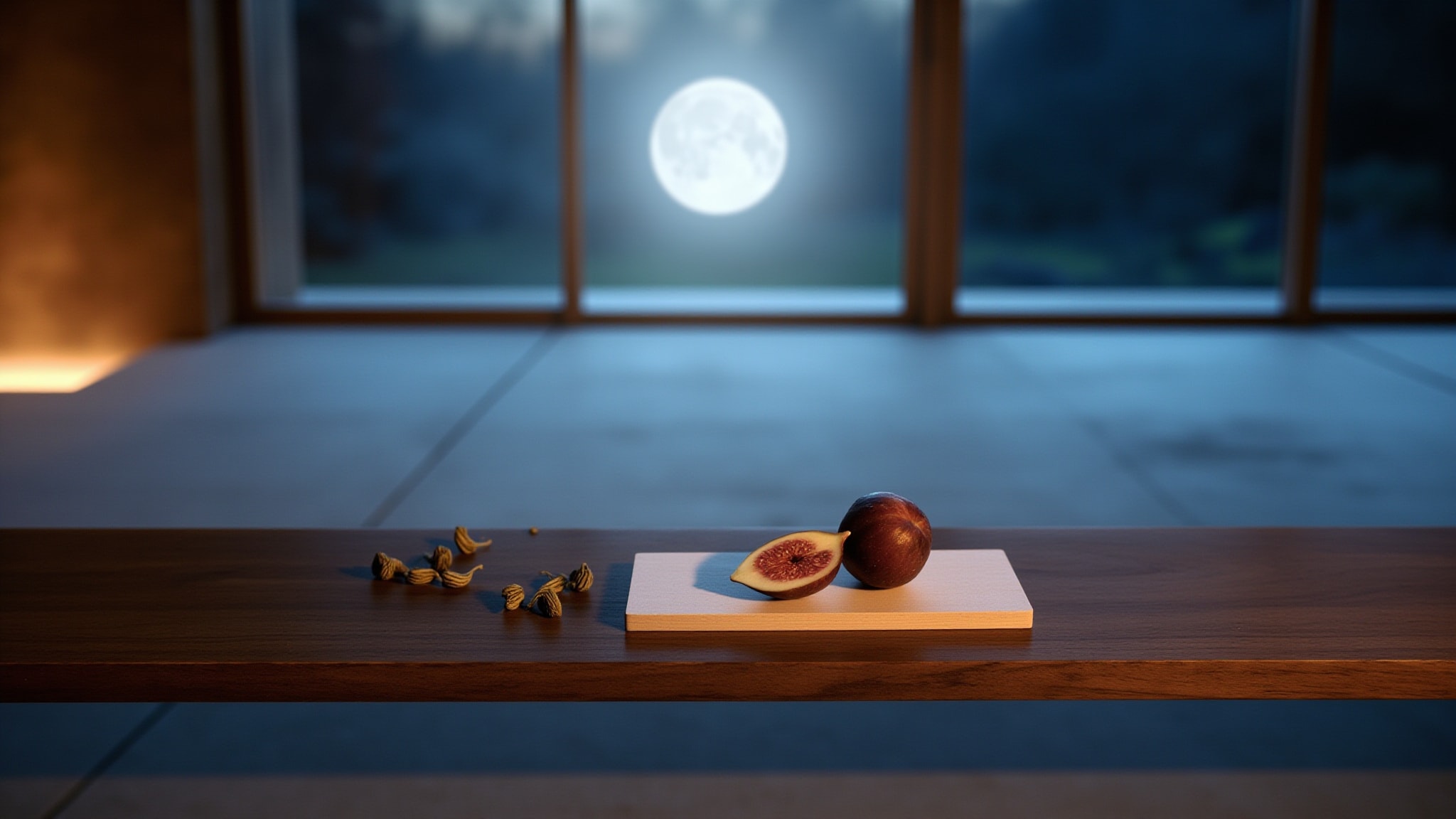
Tsukimi takes its name from the Japanese autumn tradition of moon-viewing, where families gather beneath the full harvest moon to offer gratitude for the season's yield. Dawn Spencer Hurwitz composed it in 2017 as part of her Haiku Series No. 1: Japan - Moonlight, a collection whose title evokes short poetic forms and the sensory textures of a specific place. The release distills the ritual's quiet mood, a festival observed in stillness rather than spectacle, moonlight filtering through late-evening air. It reads less like a celebration and more like a sketch of one, the kind you make sitting on a porch with a warm drink and nothing particular to say.
What sets Tsukimi apart is the way it balances two temperatures at once. The cardamom, nutmeg, and fig leaf bring a crisp, almost autumnal bite, while the Australian sandalwood, ambrette seed, and vanilla absolute settle into something soft and introspective below. That tension between cool spice and warm wood is the whole composition. Hurwitz lists cardamom CO2 and frankincense CO2 absolute among the notes, extraction methods that appear in the formula as written.
The evolution
The first spray lands cool and slightly green, fig leaf and cardamom pushing forward with the snap of cold air against skin. The peach skin note softens the edges and a dusty rose emerges, not floral so much as the memory of rosewater left on a windowsill. From there, the composition settles into its center of gravity: ambrette and Siam benzoin wrap the spices in something close to cashmere, and a quiet hush settles over the whole. The drydown is where Tsukimi earns its staying power. Australian sandalwood and Brazilian vetiver build a dense, quiet foundation that lingers well into the evening, and the base notes hold their shape with a kind of patient resolve. On fabric, the trail can stretch even longer. The next morning, what remains is a faint vanilla and hinoki trace, like cedar shavings in a drawer.
Cultural impact
Tsukimi's Japanese moon-viewing inspiration gives it a clear thematic anchor, and the haiku-format presentation suggests a wearer who values concept and craft. Wearers tend to describe it as a contemplative scent, something for cooler months and slower evenings, and its moderate projection suits people who want depth without drawing attention. The composition rewards patience: cool spice at the opening, warm wood and resin at the base, and a soft floral and fruity middle that bridges the two.