The Story
Why it exists.
The beginning
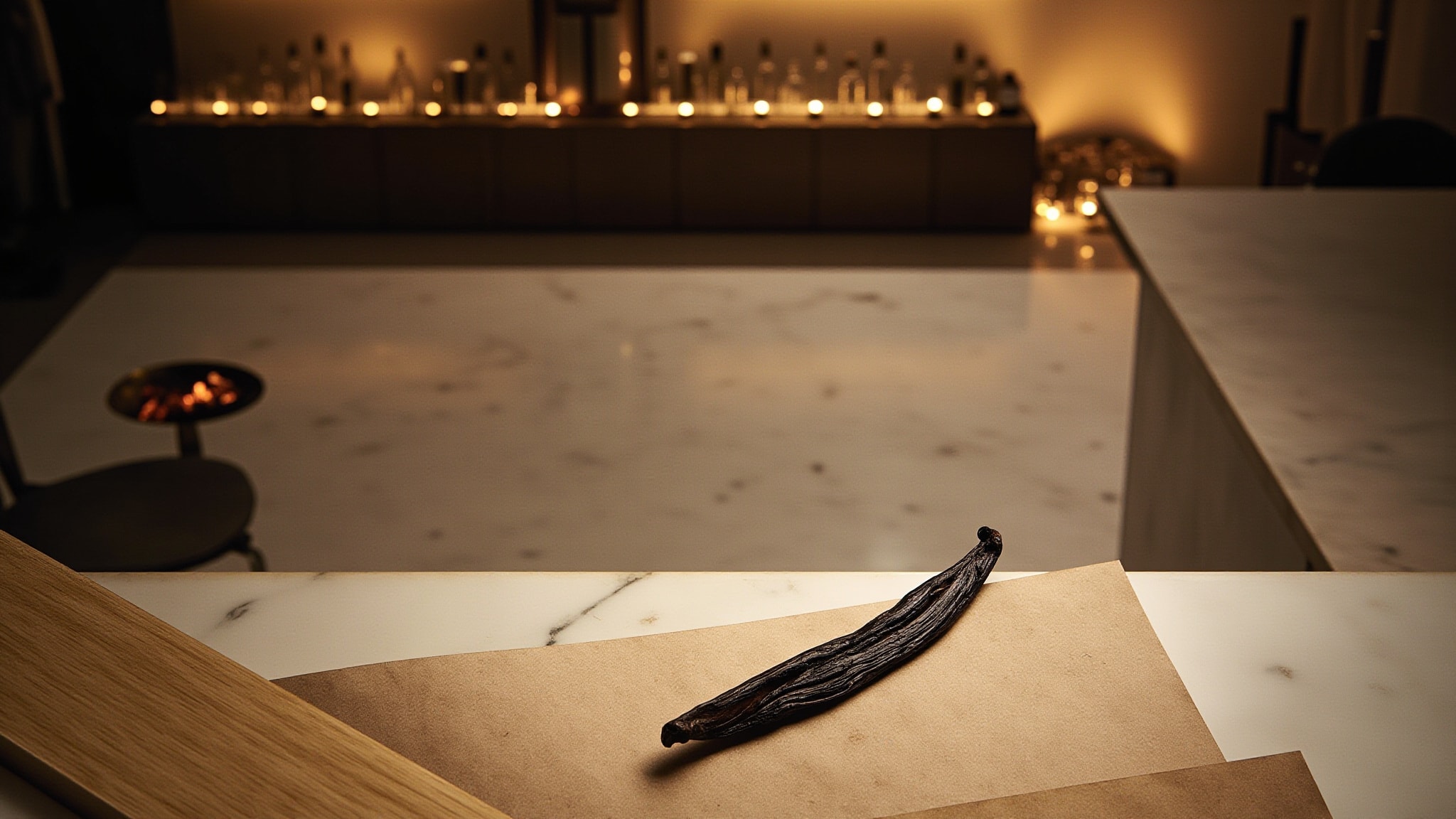
Fabrice Pellegrin created Eau Duelle in 2010 with a clear point of view: vanilla as a serious material, not a comfort note. The brief was not warm and inviting, it was bourbon vanilla from Madagascar given structure by black tea, smoke, and resin. Eau Duelle needed to be a vanilla that argues back. Diptyque, founded in 1961 by a painter, interior designer, and theater director, has always captured landscapes and memories rather than trends. Eau Duelle captures the idea of vanilla as terrain rather than sentiment, a material with intellectual weight.
The note philosophy prioritizes contrast: bourbon vanilla against black tea, warmth against smoke, resin against citrus. Each pairing prevents any single note from dominating. Cardamom and pink pepper provide fleeting spice that prevents the composition from becoming static. Elemi resin and frankincense share structural duties, each contributing smoke and balsam in slightly different proportions. The absence of explicit base notes means the heart notes themselves carry the fragrance through its entire lifespan, with ambergris and musk functioning as modifiers in the late stages rather than distinct phases.
The evolution
The fragrance moves quickly past any citrus brightness provided by bergamot, arriving at the resinous heart within minutes. Pink pepper and cardamom provide a brief aromatic spike, then fade. What remains is bourbon vanilla in dialogue with frankincense and black tea, a conversation between sweetness and astringency. Elemi resin introduces a piney, balsamic quality that prevents the vanilla from becoming cloying. As the heart progresses, ambergris and musk introduce warmth without softness, and the composition settles into a drydown defined by resinous authority rather than sweetness. The trajectory is not a journey from bright to soft but from complex to concentrated.
Cultural impact
Eau Duelle by Diptyque presents a distinctive take on vanillic composition, one that sidesteps the expected sweetness in favor of something more austere. The fragrance trades overt projection for intimacy, offering a wear experience that reveals itself to those in close proximity rather than announcing itself across a room. This approach appeals to those who prefer their scents to remain personal, a quiet signature rather than a bold statement. The house's Parisian roots show in the careful construction, where restraint itself becomes the statement.