The Story
Why it exists.
The beginning
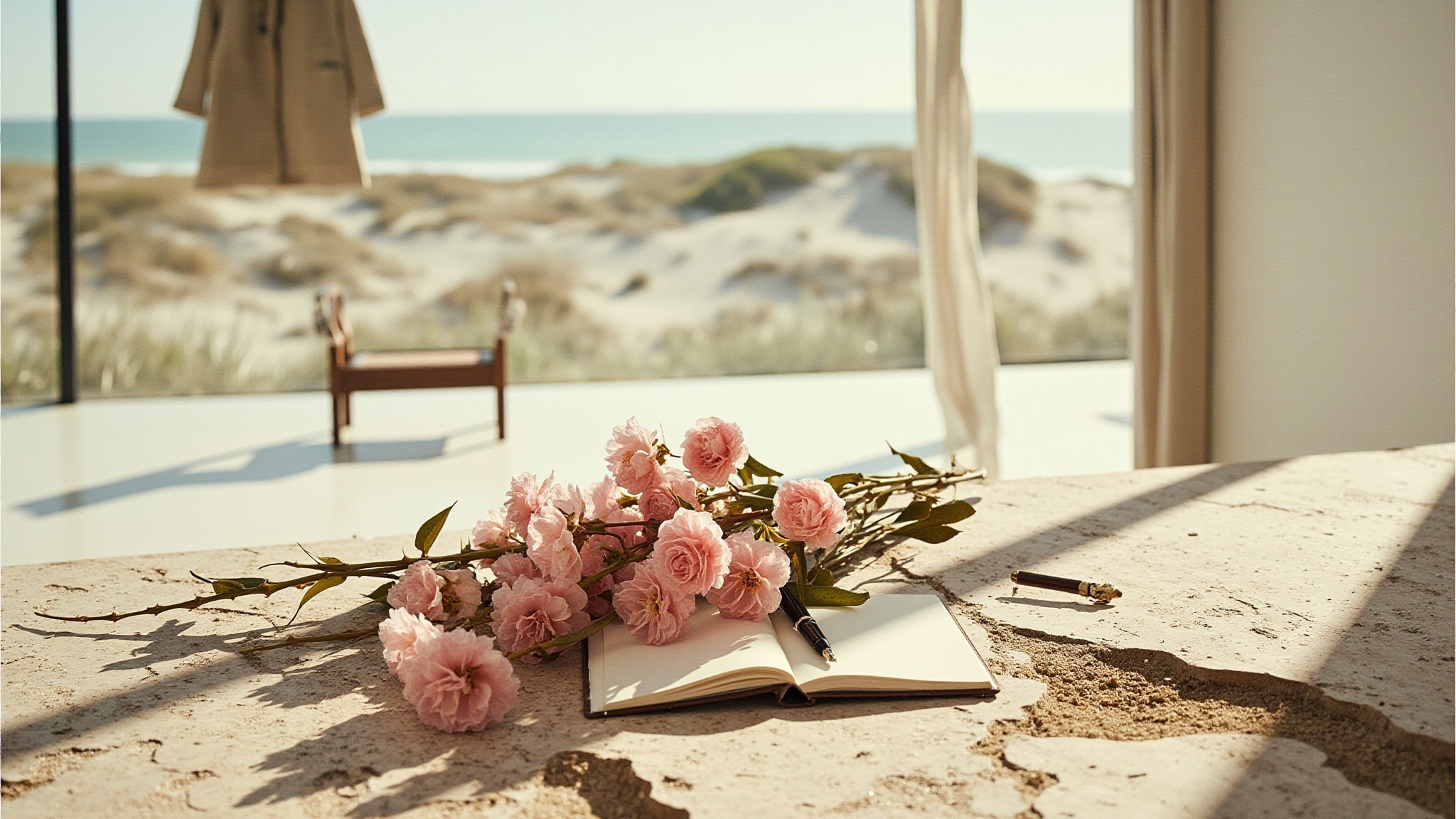
Beach Roses is Dawn Spencer Hurwitz's love letter to the wild roses that grow along coastlines, tough and sprawling, threaded through beach grass and salt spray rather than manicured gardens. Part of her numbered Rose series (this is Rose No. 3), it captures a rose that has never been tame. The composition translates a botanical study into something you wear, one where the flower isn't precious. It just survives beautifully, rooted in sand and wind, carrying the briny residue of its environment on every petal. There's an honesty to the way the rose presents itself here, without the powdery refinement of a florist's bouquet or the syrupy sweetness of a classic soliflore. Instead, the bloom arrives carrying grit, salt crystals, and the green bitterness of stems broken by coastal wind.
What sets this composition apart is the tension between marine and floral, two worlds that rarely share a bottle without one drowning the other. The aquatic notes and neroli at the top pull the rose into coastal territory, while lemon adds a sharp brightness that lifts the whole opening away from anything too dense or heavy. The Moroccan rose absolute anchors the heart with its rich, almost jammy depth, a counterweight to the airy sea spray that precedes it.
The evolution
The first ten minutes are almost all sea. Marine notes and neroli hit first, with lemon slicing through, bright and saline, while violet and water lily cool the edges. The rose hasn't arrived yet, which is disorienting if you're expecting a floral opening. The marine accord carries a green, almost vegetal quality, like kelp exposed at low tide, sharpened by the citrus and softened by the cool transparency of water lily. Violet adds a powdery iris-like shadow that keeps the brightness from feeling clinical. As the opening settles, the Moroccan rose absolute begins to surface, pushed up by Chinese geranium and carnation absolute. The carnation does something interesting here. It adds a warm, almost peppery spice that stops the rose from going soft.
Cultural impact
Beach Roses occupies an unusual position in fragrance because it takes a flower that is almost universally associated with romance, luxury, and cultivated beauty and places it in an environment that strips all of those associations away. The composition reads as a study in contrast, pairing austere coastal elements with dense floral absolutes, and that refusal to choose between elegance and rawness gives it a distinctive identity. The rose here doesn't smell like a Valentine's bouquet or a grandmother's soap. It smells like something that grew despite the conditions, not because of them.