The Story
Why it exists.
The beginning
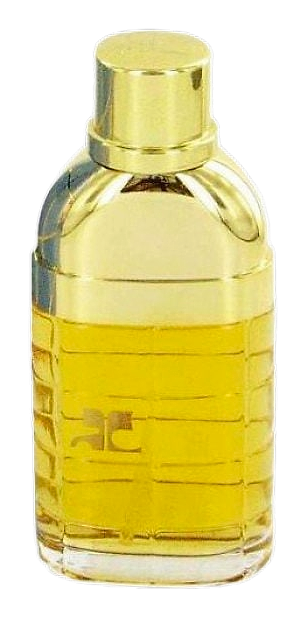
Courrèges in Blue arrived in 1983 from the house of André Courrèges. Roure Bertrand composed this fragrance, and the bottle design is credited to Courrèges himself. The name refers to blue, the color the house uses across its visual identity and a shorthand for the cool, mineral clarity the scent was designed to project. What makes the composition distinctive is how it translates the brand's clean architectural lines into something wearable on skin, with a floral-chypre architecture that feels deliberate and composed. The aldehydes give it an almost metallic shimmer in the opening, catching light the way polished glass does, before the florals settle in beneath them.
The interesting move here is the tension between the aldehyde-led opening and the dense floral heart. Aldehydes in 1983 weren't novelty, but the top carries calendula and basil alongside more conventional bergamot and mandarin, giving it a slightly herbal edge. The heart then loads in six florals, including tuberose and iris, which sounds excessive on paper but reads as a single cool bouquet rather than a competition. That chypre skeleton, moss, patchouli, vetiver, plus civet, is what keeps the whole thing from floating away into powder.
The evolution
The first hour is bright, almost metallic, aldehydes flickering over mandarin and coriander like sunlight off glass. Around the second hour the green herbs soften and the floral heart opens fully, tuberose and iris taking the lead with a cool, soapy clarity that never tips into sweetness. By hour four the chypre base has settled in, moss and patchouli grounding the composition while a thread of civet adds a faint, animal warmth underneath. The drydown, roughly six to ten hours in, is where the sandalwood and cedarwood emerge most clearly, leaving a soft, slightly musky trail on fabric the next morning. It doesn't vanish, it just gets quieter and more personal. The coriander in the top adds a quiet peppery lift that bridges the aldehydes and the florals without announcing itself, and the bergamot gives the opening a brief bitterness that keeps the citrus from ever reading as simple.
Cultural impact
In Blue sits in a lineage of 1980s floral-chypres that prized crispness and structure over sweetness. The aldehyde-chypre backbone marks it as unmistakably of its era, yet the herbal top notes keep it from reading as purely retro. Production of the fragrance was apparently discontinued, which has shaped how it's encountered today, more often through vintage bottles and collector channels than through current retail. That scarcity has given it a particular kind of presence, where the fragrance itself does the talking rather than any surrounding marketing.