
The Story
Why it exists.
The beginning
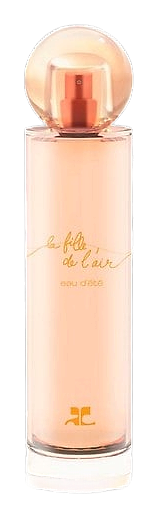
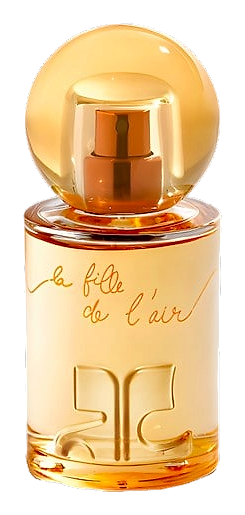
La Fille de l'Air arrived in 2015 as Courrèges brought its minimalist vocabulary to the language of scent. The name alone tells you where this lives, a girl of the air, untethered, in motion. Fabrice Pellegrin built the composition around that idea: weightlessness as the guiding principle. Nothing heavy. Nothing clingy. The brief was simple, capture the feeling of air itself, then give it somewhere to land.
What makes this work is the ozonic-neoprene pairing in the base. Neoprene, the synthetic rubber used in wetsuits, gives the drydown a clean, slightly industrial edge that keeps the florals from going saccharine. It reads as modern without being cold. The musk underneath softens everything, so what you're left with is air that remembers it came from flowers, not a laboratory. Cascalone, a synthetic cooling agent, reinforces that open, breathable quality throughout the heart.
The evolution
The opening arrives crisp, petitgrain and Calabrian bergamot together, a green-citrus brightness that feels like morning. Within minutes the neroli and orange blossom take over, and the composition softens into something translucent. Jasmine appears quietly, not pushing, just floating in the background. The ozonic quality peaks in the heart, that slightly aquatic, airy note that keeps everything suspended. By the drydown, the neoprene accord emerges, clean, faintly synthetic, like the smell of a wetsuit left to dry in the sun. Musk and cedarwood settle underneath, quiet anchors that keep the florals from disappearing entirely. On skin, expect six to eight hours. The sillage stays moderate, it announces itself to you, not the room.
Cultural impact
Courrèges built its identity on futuristic minimalism, and La Fille de l'Air continues that legacy in scent form. The 2015 launch arrived during a period when fashion houses were reexamining their relationship with modernity, and this fragrance captured that tension between precision and airiness. Its ozonic-neoprene character reflects a moment when designers were drawing from athletic and technical fabrics for high fashion, translating that vocabulary into olfactory terms. The composition's weightless structure mirrors the brand's approach to fashion as a second skin rather than an ornamental layer. Fabrice Pellegrin's work here represents a shift toward fragrances that function as architectural elements rather than decorative ones, influencing subsequent releases from houses exploring similar minimalist spaces.