The Story
Why it exists.
The beginning
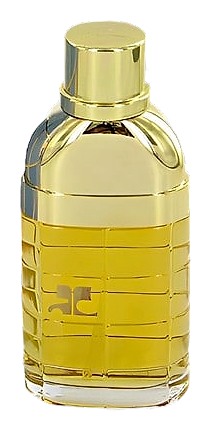
Courrèges in Blue arrived in 1983, designed by perfumer Edouard Flechier as the house's continued exploration of how fashion's clean lines could translate into scent. The brief carried the same architectural minimalism that defined the label's silhouettes, restraint as a form of power, movement as a form of expression. Flechier built the composition around aldehydes and white florals, anchoring them in a mossy, woody base that gave the fragrance its structural backbone. The 'Blue' in the name spoke to something cool and aquatic, a counterpoint to the warm, full-bodied florals dominating the decade. It was composed for a woman who wore her fragrance like a second skin, not a statement.
What makes the structure interesting is the tension between the aldehydic opening and the mossy close. Aldehydes, those effervescent, almost metallic compounds, create a cold, silvery brightness that reads as luminous rather than sweet. The citrus and herbs that accompany them in the top section keep the opening sharp and green, not juicy. Then the white florals arrive: tuberose and jasmine in full bloom, softened by powdery iris and violet. The moss and vetiver in the base aren't just grounding elements, they're what give the drydown its character, its slightly animalic intimacy, its sense of having been worn rather than applied.
The evolution
The opening announces itself with aldehydes that shimmer like light on water. The citrus and herbs arrive next, bergamot, mandarin, basil, but the aldehydic brightness keeps them cool, lifted, almost cold. There's a clarity here that feels intentional, almost clinical. Within twenty minutes the florals begin to assert themselves. The green herbs recede and the white florals take over: tuberose first, heady and lush, then jasmine and orange blossom. Iris and violet add a powdery softness that prevents the florals from becoming too heavy. The fruity notes, black currant, peach, arrive quietly, adding dimension without sweetness. By the second hour the composition begins its shift toward the base. The florals thin and the moss asserts itself, along with sandalwood and cedar. The amber appears as a warmth that stays close to the skin rather than projecting outward. Vetiver and patchouli add an earthy, slightly animalic depth. The drydown settles into something intimate, warm woods, soft musk, the faintest trace of civet. It remains close to the skin for hours.
Cultural impact
Courreges in Blue arrived in 1983 as a deliberate counterpoint to the opulent florals dominating the women fragrance market. The French fashion house, already known for its space-age mini-skirts and white vinyl boots, applied the same minimalist logic to scent, creating a fragrance that challenged the established perfumery conventions of its era. Its aldehydic profile and cool aquatic undertones represented a radical departure from the warm, complex compositions that had dominated women perfumery for decades, positioning it as both a fashion statement and a cultural artifact of the early 1980s.