The Story
Why it exists.
The beginning
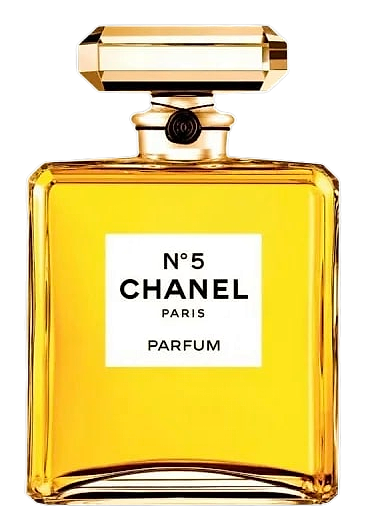
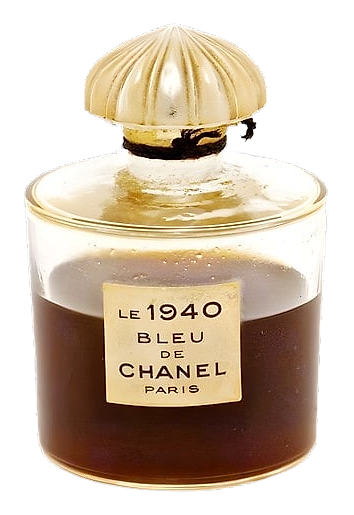
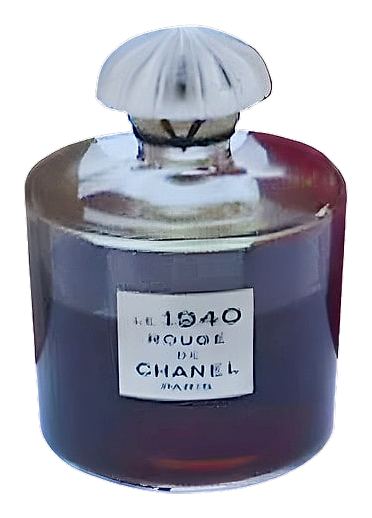
In 1931, Ernest Beaux was already rewriting the rules of modern perfumery. His laboratory produced work that declared a woman could smell abstract rather than floral, and Le 1940 Rouge de Chanel came from that same conviction that fragrance should sharpen the senses rather than simply decorate. Beaux built this one for women, but the brief was never softness. The aldehyde top is the headline, the first thing you notice, carrying a bright, soapy, almost metallic brightness that cuts through before anything else has room to land. Underneath, the florals and the warm base begin to arrange themselves, never quite taming the opening's sharpness but rather orbiting it.
The aldehydes here are doing structural work that most fragrances leave to heavy base notes, anchoring the first impression with their sharp synthetic edge. Beaux lets those molecules carry the opening, and rose and violet unfold underneath without ever fully softening the perimeter. Geranium adds an herbal, almost green roughness on top, like crushed leaves underfoot. Java vetiver in the base brings an earthy smokiness, its roots holding a darker, more mineral character that grounds the composition.
The evolution
The aldehydes arrive fast and loud, that soapy-ozone brightness characteristic of early twentieth century French perfumery. They dominate the opening, sharpening every breath and announcing themselves with a clarity that asks for attention. Then geranium steps forward with its herbal greenness, like torn stems releasing their sap. The heart opens with rose coming through powdered and slightly metallic, folded into violet's cooler, more translucent sweetness. Neither flower overwhelms. They sit side by side, rose giving weight, violet giving lift, the two negotiating a balance that never collapses into either pure floral prettiness or full abstraction. As the hours pass, amber deepens the base, warm and resinous without sweetness tipping into syrup.
Cultural impact
Production was apparently discontinued, which places Le 1940 Rouge de Chanel firmly in the category of compositions that survive mainly through study rather than availability. It belongs to a small body of aldehyde-forward florals from the early twentieth century, a period when synthetic materials were being used not as shortcuts but as structural tools, as a way to build perfumes that smelled unlike anything that had come before. Beaux's hand is unmistakable in the construction: aldehydes treated as architecture, florals arranged to flatter that brightness, amber and vetiver doing the quiet holding underneath.