The Story
Why it exists.
The beginning
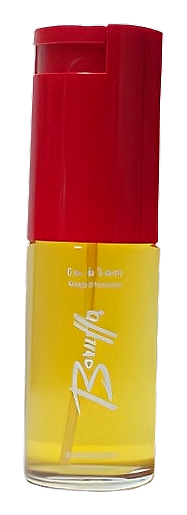
Atkinsons has been based in Soho since the late 18th century, a British perfume house with royal appointments and a two-century habit of not following the crowd. Baruffa, launched in 1981, belongs to that lineage. The name itself sounds like it belongs to someone with opinions: Baruffa. The brief was clearly not to be ignored. Floral aldehyde was the territory, but the execution was pure Atkinsons, committing fully to a composition that lifts and shimmers rather than settling into something polite. The aldehydes give the opening its characteristic radiance, a lifted quality that makes the florals above it glow rather than droop.
The aldehyde-carnation-star anise combination is the structural curiosity here. Aldehydes give Baruffa its opening brightness, that lifted, slightly soapy champagne-bubble quality that makes florals shimmer rather than sit flat. Carnation brings its own complexity: clove-adjacent, warm, with a peppery edge that stops the composition from becoming merely pretty. Star anise is the quiet oddball, aniseed, aromatic, lending a green-spicy character that keeps the aldehyde sweetness honest rather than powdery.
The evolution
The aldehydes hit first. Immediate, shimmering, bright, the scent announces itself without shouting. Bergamot and blackcurrant follow, adding tartness and a slight green quality. The heart takes its time arriving, but when it does, it's substantial: carnation leading with warmth, rose and ylang-ylang filling out the floral structure, neroli and orange flower adding their own distinct sweetness. African orange flower gives it a slightly different quality than a standard rose-violet aldehyde. The drydown belongs to frankincense. One reviewer noted the EDP version develops a "beautifully natural incense scent" that differs markedly from the greener EDT.
Cultural impact
Baruffa arrived in 1981, a period when bold, assertive fragrances were more prevalent than they are today. The aldehydic-floral genre was well-established by then, but Baruffa's particular combination of aldehydes, carnation, and star anise gives it a character that stands apart within that tradition. What makes it notable now is partly its rarity: discontinued and hard to find, it has become a collector's item for those who appreciate the aldehyde tradition. The composition represents a particular approach to perfumery, one built on layering unexpected notes into a coherent whole.