
The Story
Why it exists.
The beginning
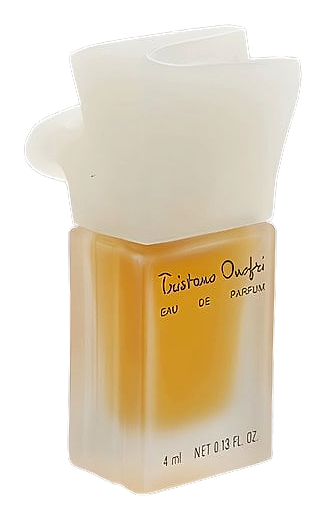
Tristano Onofri entered perfumery in 1989 with a debut that blended aromatic herbs and warm amber, an olfactory extension of the house's tailored precision. By 1990, the label expanded its olfactory vocabulary with Tristano Onofri Femme, a chypre-floral that critics noted for its rustic quality and classical structure. Where contemporaries were chasing aquatics and minimalism, this fragrance leaned into tradition, an herbal-citrus opening giving way to a tuberose-dominant heart, anchored by a mossy, amber-rich base. It was, in essence, the house applying its tailoring discipline to fragrance: each note cut, sewn, and finished with intention.
The note structure here is unusual in its layering of contradiction. Basil and orange blossom shouldn't coexist easily, one is sharply green, the other indolic and sweet, yet in Tristano Onofri Femme they do, creating an opening that is both medicinal and floral. The heart deploys tuberose as its anchor, supported by jasmine and rose, but the addition of French labdanum (a resinous, leathery material) adds a dusty warmth that prevents the florals from becoming purely feminine or sweet. This labdanum presence is the quiet structural choice that elevates the composition, present enough to be felt, subtle enough to go unnamed by most reviewers.
The evolution
The opening announces itself with herb and citrus, basil and bergamot first, mandarin orange brightening the edges. For about thirty minutes, the composition reads sharp and green, almost medicinal. Then the florals arrive. Tuberose takes center stage, jasmine follows, and the orange blossom sweetness deepens into something almost animal. The hand-off is sudden: you're aware of leaving one fragrance and entering another. By the third hour, the oakmoss emerges, that classic chypre anchor, and the patchouli brings earth. Vanilla and amber warm the base without softening it. The drydown is mossy, slightly smoky, and lingers close to the skin for hours. On fabric, it can last into the next day, quieter but still present.
Cultural impact
Released in 1990, Tristano Onofri Femme arrived at a moment when the fragrance market was shifting toward lighter, fresher profiles. Aquatics were rising. Minimalism ruled. Against that backdrop, this chypre-floral leaned deliberately into tradition, mossy, floral, and unapologetically classical. Its rustic quality and adherence to classic structure gave it an almost counter-cultural stance for the era. Over three decades later, it remains a reference point for collectors who value that old-world restraint.