The Story
Why it exists.
The beginning
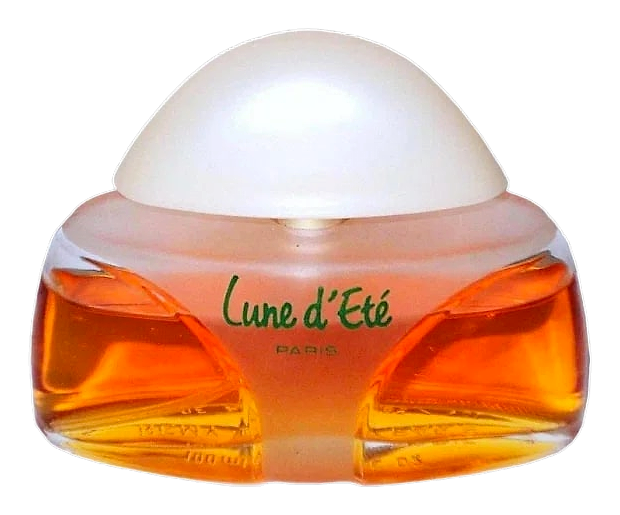
Lune d'Ete arrived in 1998 from Rémy Latour, a French house rooted in the Parfums Parour group. The composition reads like a warm-weather floral with enough ambered base to carry past sundown. Rémy Latour's portfolio has long carried a classically French sensibility, and Lune d'Ete fits comfortably within it. The fragrance opens with a generous pour of floral tones: bright petal notes lifting into a soft, sunlit haze before settling into the warmer resins and musks underneath. That base is what gives the juice its staying power, a quiet warmth that keeps the florals tethered to skin rather than letting them drift away on the breeze. As the hours pass, the top notes recede and the ambered undercurrent takes over, leaving something soft and golden in their wake.
What's interesting here is the structure. The opening runs seven notes wide: bergamot, clove, honey, hyacinth, orange, rose, and tagetes, which is unusually generous for a floral. Most compositions narrow the top to two or three materials to keep the first hour legible. Lune d'Ete does the opposite. The heart then collapses down to four materials, gardenia, jasmine, peach, ylang-ylang, that read as one dense white-floral pulse. The base opens up again to five: amber, cedar, moss, musk, sandalwood. This breathing pattern, wide, narrow, wide, gives the fragrance a shape rather than a linear fade.
The evolution
The first thirty minutes are the loudest Lune d'Ete gets. Honey, clove, and orange arrive almost together, giving the opening a spiced sweetness that reads warm before any floral has settled. The hyacinth and rose push through in the background, green-edged and slightly powdery, but the honey keeps anchoring everything to something syrupy. By the end of the first hour, the gardenia, jasmine, and ylang-ylang take over completely. This is where the fragrance becomes what most people remember it as: a creamy, almost tropical white floral with peach giving it just enough fruit to keep it from turning soapy. The clove is still working underneath, threading warmth through the petals. Hour three to hour five, the base arrives quietly. Amber and sandalwood warm the drydown, moss adds a damp greenness that keeps it from going purely sweet, and the musk settles against skin. What lingers past hour six is mostly the amber-honey-musks combination, softer, warmer, almost like the ghost of the opening. The gardenia fades first. The honey stays longest.
Cultural impact
Lune d'Ete wears close rather than projecting outward, which suits the kind of person who wants a floral that lingers on their own skin rather than filling the space around them. The sillage is intimate, the kind of scent you catch when you lean in close to someone rather than across a room. There's something deliberate about that restraint, a confidence in letting the composition speak softly rather than shouting. The fragrance opens with lifted floral tones, bright enough to feel airy, before settling into the warmer amber and musk base as the hours pass.