The Story
Why it exists.
The beginning
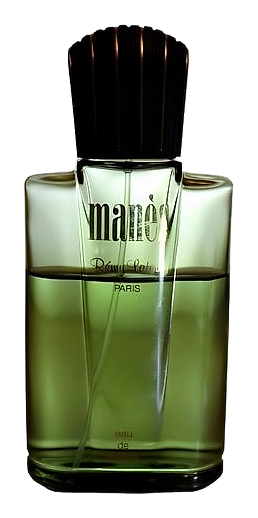
Manès arrived in 1990, joining Rémy Latour's portfolio of masculine fragrances. It was never a blockbuster launch. It was a quieter statement: warm, woody, aromatic, and considered in its construction. The composition draws on classical masculine structure, the kind that relies on lavender and cedar doing honest work rather than chasing novelty. Its accord profile reads woody, lavender, powdery, warm spicy, and aromatic, a combination that rewards attention. The lavender opens with a clean, herbal clarity, bright and slightly cooling against the skin. Cedar arrives early too, offering a dry, pencil-shaving crispness that anchors the top notes and keeps them from floating away.
What makes Manès interesting is its refusal to modernize beyond its era. The heart stacks sandalwood against woody notes, lavender, cedar, green notes, and a measure of spice. The lavender here isn't the sharp, almost mentholated variety found in older barbershop scents; it's softer, rounder, more herbal than medicinal, and it sits comfortably alongside the cedar without fighting for attention. Cedar gives the structure its skeleton, that dry, slightly resinous backbone that holds the whole composition upright.
The evolution
The opening reads sharp and green, a quick hit of lavender and herbal brightness that announces itself without shouting. Within the first fifteen minutes, the cedar and sandalwood arrive underneath, warming the composition from the spine and giving the lavender something to rest against. The middle stretch is where the woody notes settle in fully, the dry spicy quality coming forward as the lavender softens and recedes. The powdery facet becomes more pronounced during this phase, lending the composition a soft, almost talc-like texture that blurs the line between skin scent and applied fragrance. As the hours pass, the green and aromatic top fades, replaced by a sandalwood-cedar blend that sits close to skin and feels increasingly personal.
Cultural impact
Manès carries the sensibility of an earlier era of masculine perfumery, when compositions leaned on lavender, cedar, and sandalwood to do the heavy lifting rather than modern synthetic boosters. The lavender here feels like an honest echo of older aromatic traditions, softened by the warmth of sandalwood and the dry structure of cedar. It's a fragrance that rewards slow wearing, revealing different facets as the hours pass: the bright herbal opening, the spiced woody middle, and the soft powdery drydown that settles close to skin.